In this guide
A weekend with fewer surprises
Pack around the cabin, not just the clothes
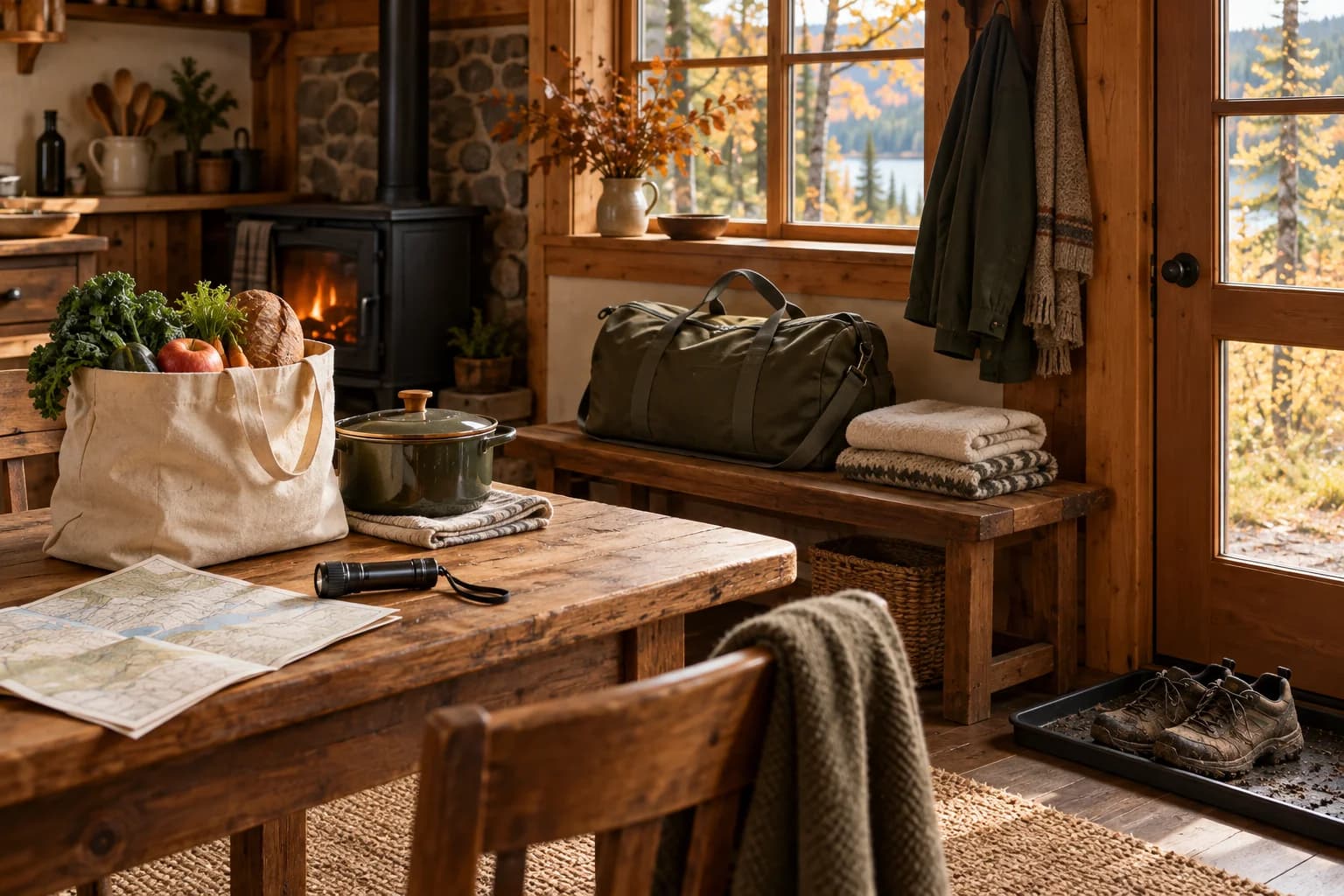
A cabin weekend combines several small jobs: getting through the door, making the first meal, sleeping comfortably and coming back from an outdoor day. Packing only a cozy outfit leaves the kitchen and arrival questions unanswered. Packing an entire camping setup can be just as unnecessary when the accommodation supplies it. This cabin packing list starts with the exact booking and a short meal plan. It is aimed at a furnished weekend base reached by road, rather than a remote expedition or a winter survival setup. Decide which activities you will actually do, then assign clothing, groceries and outdoor gear their own place. Your list should get shorter as the host confirms what is included.
Confirm these details before shopping
- 01
Kitchen and food storage
Ask about the cooking appliances, refrigerator space, pots, utensils, dishware and coffee setup. A kitchenette label alone does not tell you what equipment is available.
- 02
Beds, towels and bathroom
Check whether sheets, pillows, blankets and towels are included for every bed you will use. Confirm whether the bathroom is inside the unit or in shared facilities.
- 03
Arrival and local access
Save check-in instructions, the host's contact route and the exact address. Check key collection, parking, the final approach and the nearest practical grocery stop.
- 04
Seasonal facilities and rules
Confirm heating, water availability, opening dates and any restrictions on outdoor cooking or drying equipment. Choose activities around the current local conditions.
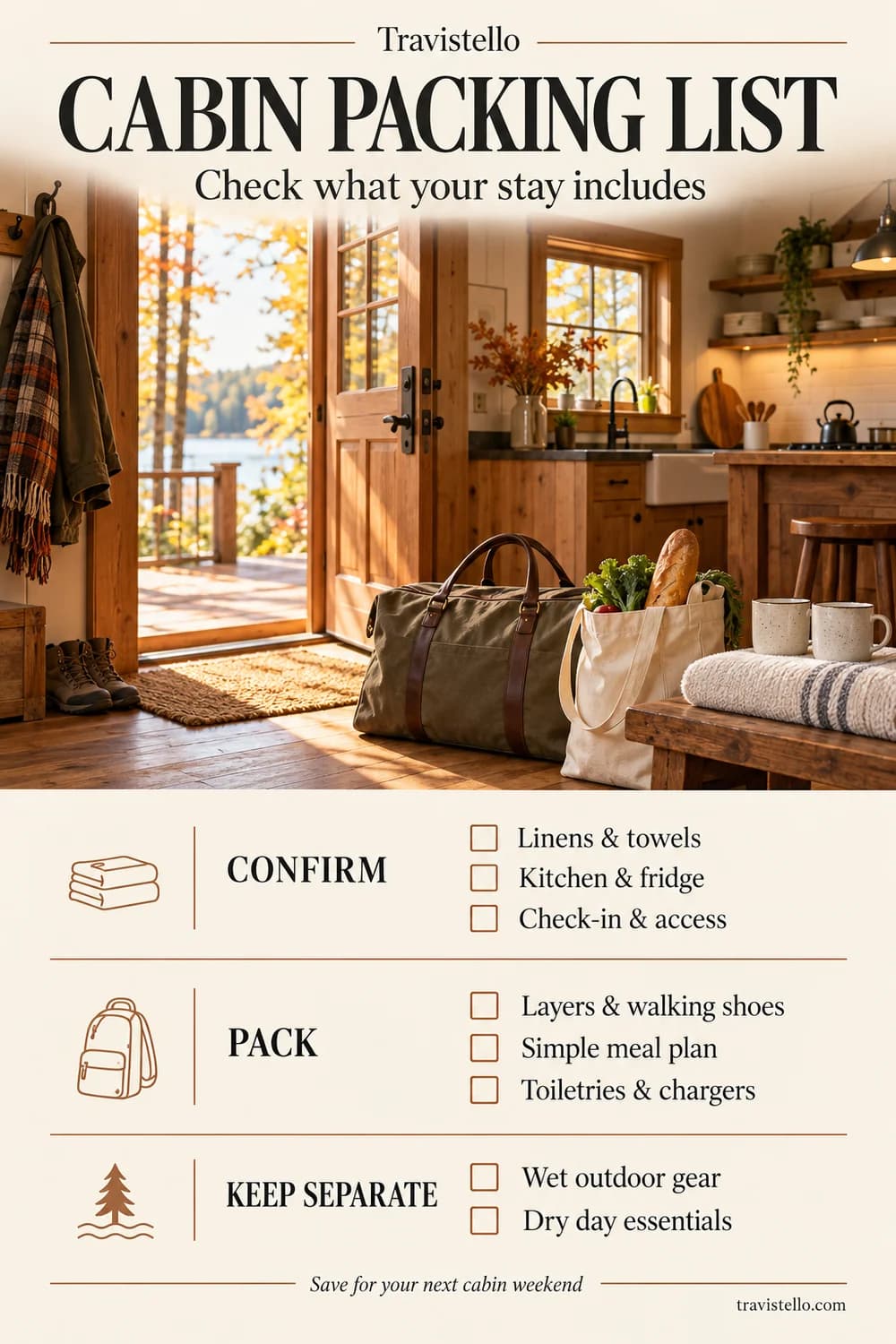
The listing is your reference
A cabin name does not establish its facilities
KOA's current cabin guidance distinguishes its Camping Cabins and Deluxe Cabins, while directing guests to the individual campground for the actual amenities. That is a useful reminder even when you book with another operator: a bathroom, kitchenette or linen service belongs to the specific unit, not to the word cabin. Make a simple included-and-bring note from the listing. If bedding is supplied, leave the spare sheets at home. If a coffee maker is listed, ask what format it takes rather than carrying an incompatible bag of supplies. Clarify an unanswered question with the property before departure. This is particularly useful for a shared trip, where two people can otherwise pack the same saucepan and nobody brings what the group actually needs.
Food without a whole pantry
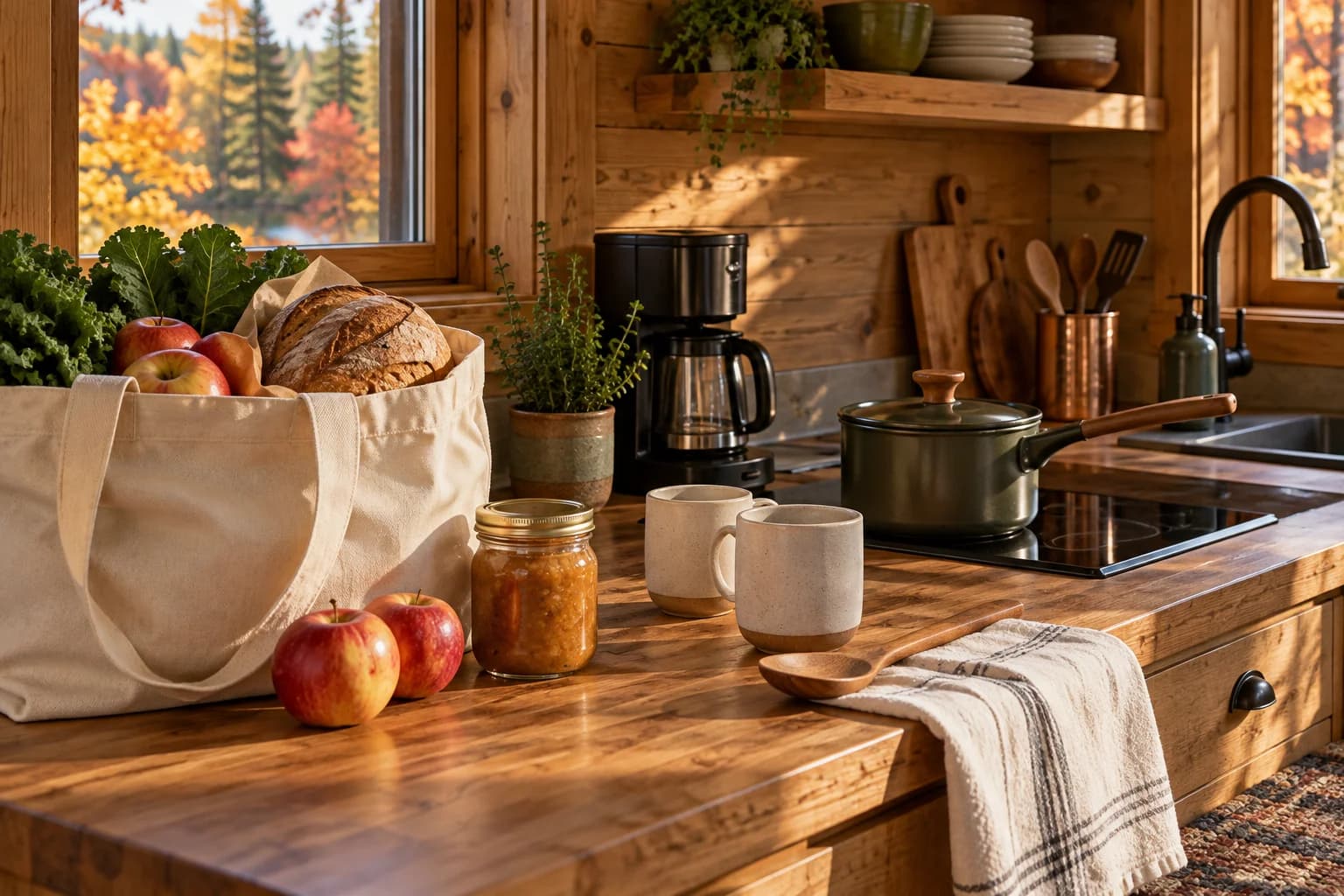
Match two easy meals to the actual kitchen
Plan the arrival meal first, then breakfast and the next day's main meal around your itinerary. Write down the ingredients and the few tools each meal needs. Compare that list with the confirmed kitchen inventory before packing cookware. A simple reheating plan suits a different kitchen from a meal that needs several burners. Group shelf-stable groceries separately from items that need controlled cold storage, and follow the food and cooler instructions during transport even if a refrigerator awaits at the cabin. Check the available storage space before bringing a large shop. Share the list with your travel companions so one person handles groceries and another handles the missing equipment. Include washing-up supplies only when the host says they are needed. Leave room for the return trip rather than filling every container before you leave.
Clothes for actual plans
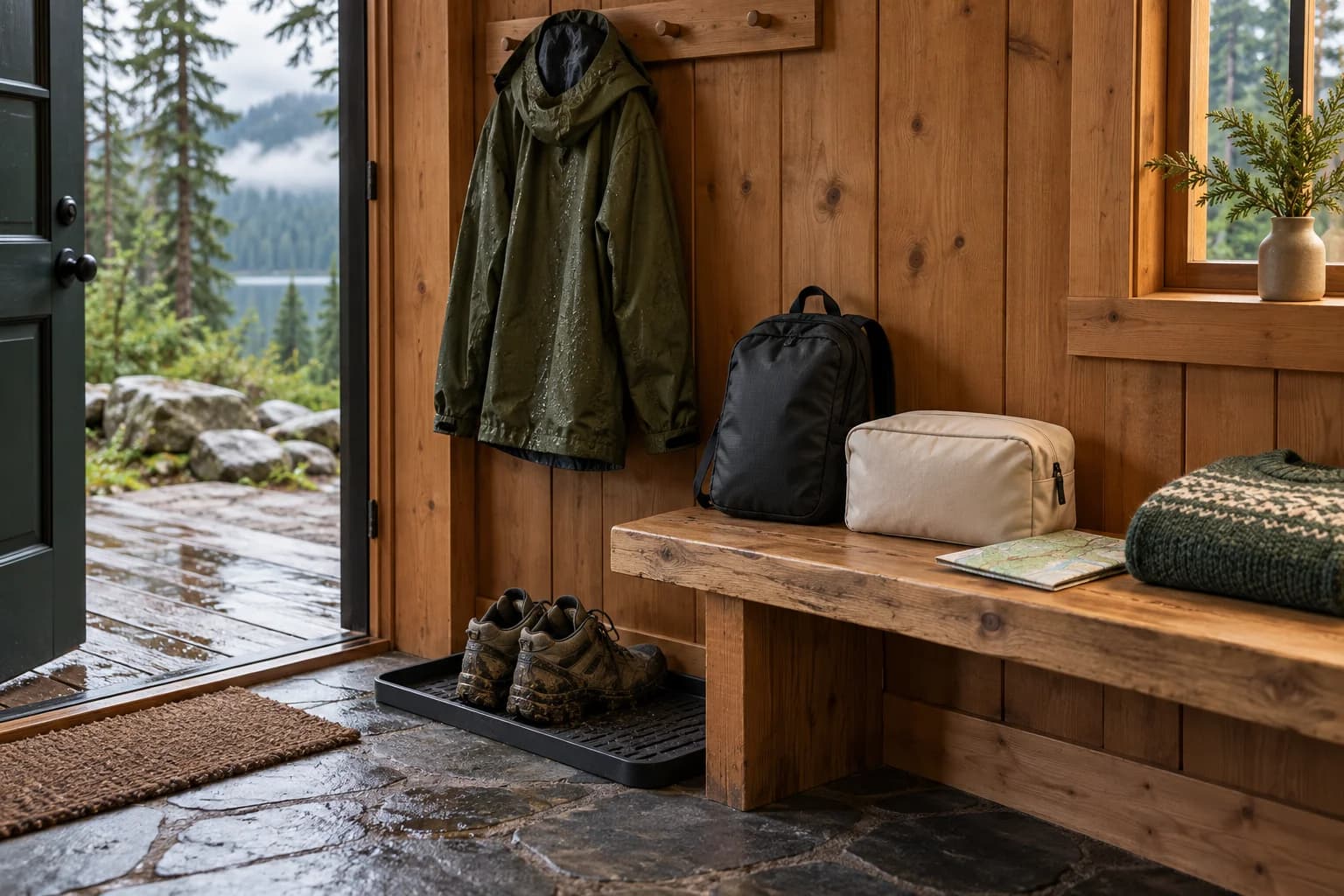
Give walking gear a different home from clean clothes
Use the forecast and your planned walking routes to choose footwear, a weather layer and comfortable indoor clothes. Keep muddy shoes on the permitted entry tray or in a suitable separate carrier, and use the host's approved drying space for damp outer layers. The small day kit has a different job from the main weekend bag. The existing Matador 18L Packable Backpack research can help you consider that role, while the city carry-style guide compares broader carrying preferences. Neither a packable label nor a fabric description means every bag protects its contents from rain. Put the layer, water and personal items you will need on an outing together. Keep tomorrow's dry clothing apart from anything wet when you return. The cabin's floor and furniture should remain usable for the next guest as well as your own group.

Protect a selected dry group
Use a dry bag for a defined job
A separate dry bag can be useful when an outing calls for protecting a small group of dry essentials. The Matador FlatPak Dry Bag 8L V2 research records the Garnet model's 83 g weight, 8-liter capacity and published 40 by 22 by 17 cm dimensions. Matador states an IPX7 rating when the rolltop is properly secured and instructs at least three rolls before buckling. Treat that as a conditional manufacturer claim, with correct closure and the exact instructions still essential. Choose the contents before choosing the bag: a spare dry layer has a different fit requirement from a collection of fragile devices. Keep sharp items away from fabric that protects the group. A sealed bag does not dry damp clothing; remove wet items and use a suitable permitted drying arrangement when you return. Avoid making valuable electronics the experiment that tells you whether a new closure technique worked.

Fill only the confirmed gaps
Keep the bathroom kit and return laundry simple
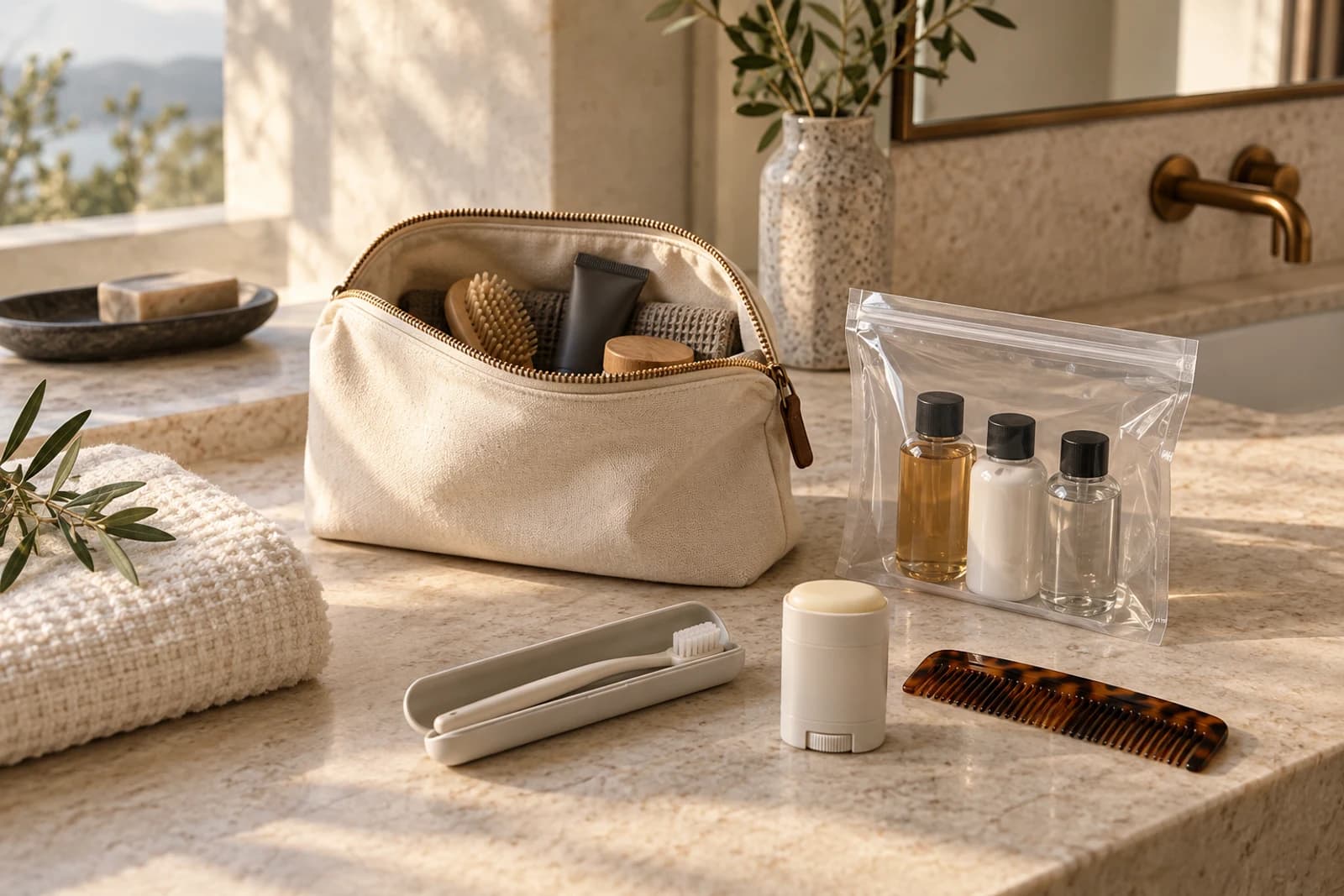
Bring the toiletries you normally use and any towel your booking requires. The toiletry packing guide helps you reduce the small personal-care kit before departure. If you need a compact personal towel, the existing Matador NanoDry Packable Beach Towel research provides its own dimensional and care reference; open and hang it between uses instead of leaving it inside its storage pocket. Give dry worn clothes a separate route home. The existing Eagle Creek Packable Laundry Sack is one removable clothing-group option, with a drawstring rather than an assumed waterproof or odor-proof seal. Keep damp towels and leaking personal-care items out of that dry laundry group. Your own towels, reusable bag and familiar toiletries may already solve the job, so a cabin weekend does not automatically require buying a new organizer.


Make the final departure check
- 01
Before leaving home
Save the arrival instructions offline, charge the light and devices you plan to use, and check the agreed grocery and kitchen list. Make sure the first meal and the items needed after check-in are accessible.
- 02
Before leaving the cabin
Follow the host's checkout and rubbish instructions. Check hooks, outlets, refrigerator shelves, cupboards and any permitted drying place before closing your bags.
- 03
After unpacking
Remove damp gear from temporary carriers, clean and dry it according to its care instructions and note the supplies you actually used. Keep that shorter list for the next similar stay.
Sources and next decisions
Keep the next packing list specific
A good cabin list is a record of the accommodation and activities, not a fixed number of must-buy accessories. Operator references checked on October 8, 2026: koa.com and koa.com . Exact new-product source: matadorequipment.com . The recorded France dry-bag offer is EUR 35; other storefronts and shipping destinations can differ. Earlier linked product research retains its own verification dates. If your next stay is shared dorm accommodation, use the hostel packing guide for the different bedside, locker and quiet-arrival routine. The cabin scenes are original conceptual illustrations; named product photographs are official manufacturer images.