In this guide
A first coach trip
Plan three moments, not an entire suitcase
Your first Amtrak coach journey becomes easier to prepare for when you separate three moments: finding and boarding the train, spending time at your seat, and getting off at the right stop. Each moment needs a different part of your luggage. A ticket buried beneath clothing is inconvenient at the station; a charger in a stored bag is inconvenient after you sit down. This guide is for coach travel with a practical seat-side kit. Private-room amenities, food service and station facilities vary, so begin with the actual reservation and route. Keep the plan small enough to carry comfortably and simple enough to repeat on a connecting journey. A familiar bag, water bottle and headphones may already cover most of the job.
Check the booking before filling the bag
- 01
Ticket and boarding station
Confirm the date, train, departure station and destination. Save access to your ticket and any required identification, then read the current station and boarding instructions.
- 02
Bags and connections
Check the operator's current allowance, safe lifting requirements and storage instructions. Verify checked-baggage service at both ends and any different rules on a connecting bus.
- 03
Food and timing
Check the service offered on your train and plan for the time between meals or practical stops. Do not assume that every route has the same dining arrangements.
- 04
Getting away from the destination station
Save the next transport step and a usable arrival contact. Keep the items needed for that connection accessible before reaching your stop.
Board with a manageable load
Choose bags you can move through the journey
Think beyond the published size limit. You need to move the bags through the station, handle boarding and place them in the permitted storage area. Use Amtrak's current baggage information for your exact service; checked baggage is not available at every station or on every train. A connecting carrier can have a different policy. Keep aisles, doors and other passengers' seats clear, and follow the crew's directions about where a bag belongs. The carry-on selection guide can help you think about handling, handles and accessible compartments before choosing a larger travel bag. For the walking portion of the trip, the city carry-style guide compares how a backpack and a shoulder bag serve different loads. Buying another bag is useful only when the bag you have cannot handle the actual journey.
Tickets at hand
Use quick-access storage while wearing the backpack
A pocket on the backpack strap can help during station transfers, provided it fits both the backpack and the items you plan to carry. The Matador Speed Stash research records the current Black model's 78 g weight and published size. Its locking bars work with sternum-strap hardware; check that requirement before expecting the mounting system to suit your bag. Put the item you need for boarding in a place you can reach deliberately. Keep closures shut and remain aware of your belongings. A quick-access accessory is not an anti-theft guarantee. Before storing the backpack away from your seat, move the essentials you will need into your reachable kit. Otherwise the pocket that helped at the station becomes another inaccessible compartment.

A small seat kit
Keep the useful group within reach
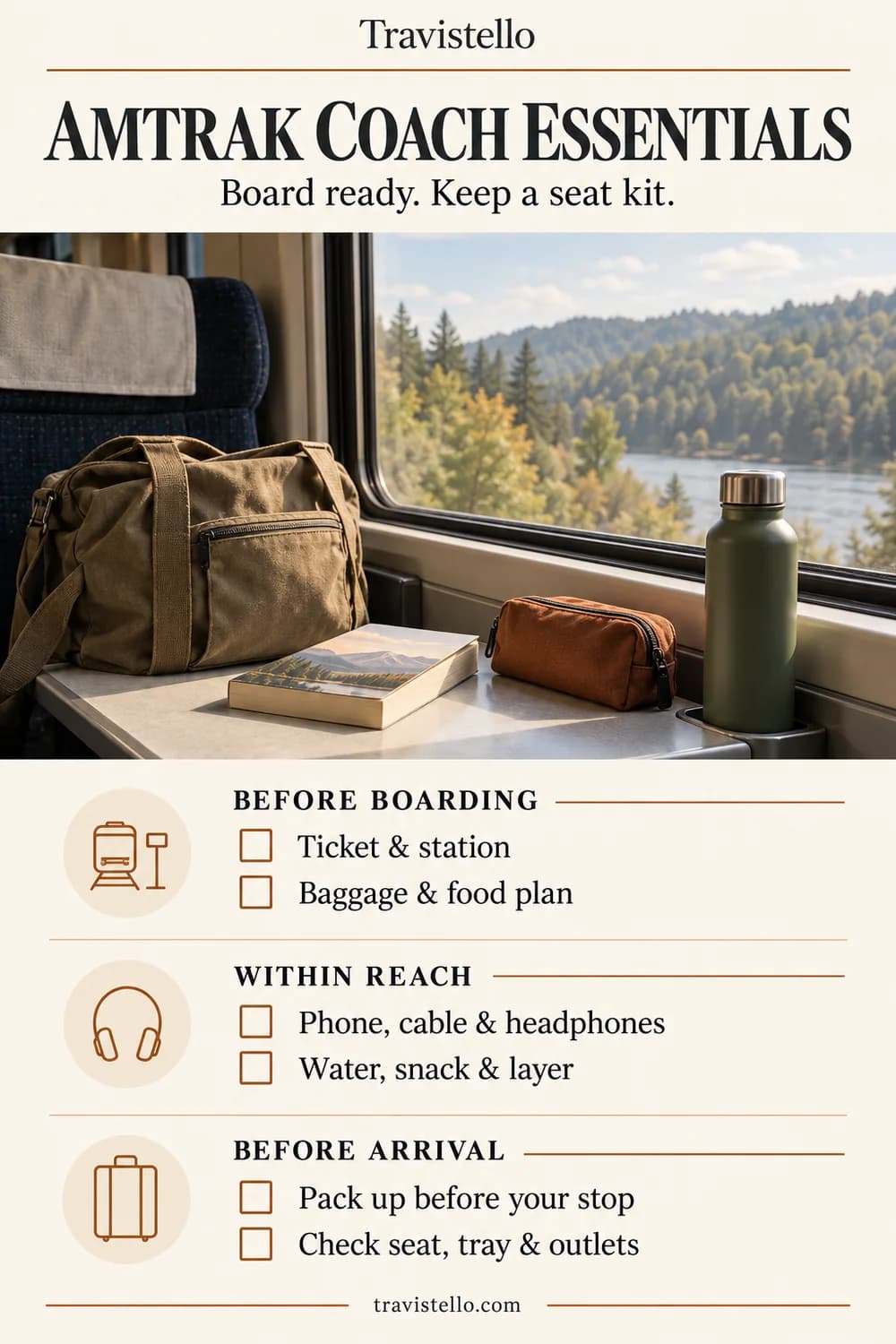
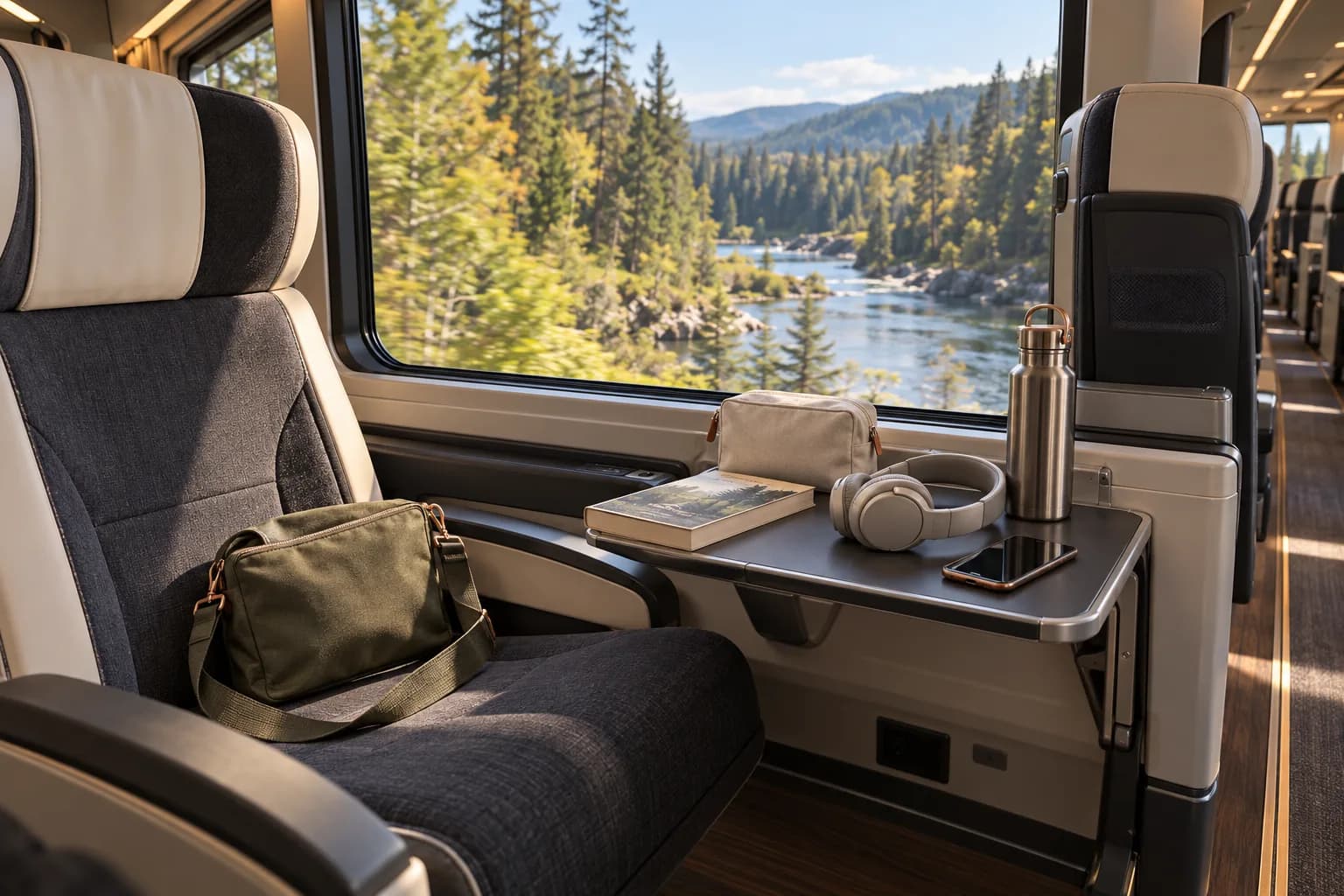
Set aside a phone, short charging cable, headphones, reading material, water, a suitable snack and an extra layer if you expect to use one. Add your own personal necessities, then choose the smallest carrier that holds that group comfortably. The Matador 18L Packable Backpack research offers a reference for a portable day-bag role; compare its dimensions with the permitted storage space before choosing it for the reachable kit. A small pouch may already be enough. Keep the kit in the permitted area close to you. Return the phone, cable and other small items to the same place after using them. Leave the adjacent seat available for passengers and avoid spreading belongings into the aisle. The purpose is convenient access to a defined group, not a second fully packed travel bag.

Charging without a tangle
Give cables and sound a simple plan
Charge the devices you need before leaving and bring the right short cable for each one. Check the actual facilities on your train; a displayed outlet or advertised connection does not replace a plan for the parts of the journey when charging or internet access is unavailable. The tomtoc Terra-A27 Portable Pouch research is useful when loose accessories need their own removable group. The Anker Laptop Power Bank 25K, 165W research offers a larger-capacity charging reference, with its own weight, ports and verification dates. Carrying that larger battery makes sense only when your devices and time away from a reliable outlet justify it. Keep cables out of shared walking space and use headphones for audible entertainment. Download the ticket access, reading or entertainment you expect to need before boarding instead of relying on a continuous connection.


Food for the actual service
Plan a meal you can manage at the seat
Check Amtrak's current personal-food guidance before choosing what to bring. Its policy permits personal food at your seat, with restrictions for dining and lounge spaces, and says staff cannot heat, refrigerate or store your personal food. Choose a plan you can manage within those conditions. Bring food and drink in appropriate closed containers, follow their storage instructions and keep any supplies you need for the meal together. Confirm the actual onboard service instead of assuming that a coach reservation includes a meal. Keep the tray usable for your neighbor and collect your rubbish after eating. A simple food plan is easier to handle than an assortment of containers that needs preparation or facilities the train does not provide.
A transfer is a new check
Keep the next part of the trip separate
A rail trip may connect to a flight, bus or overnight stay. Read each operator's requirements rather than carrying one allowance across the whole itinerary. For a later flight, the personal-item sizing guide explains why you need to check the specific airline's dimensions. The rail and air rules remain separate. Keep a short connection note with the next departure location and how you plan to reach it. Make that plan workable even when the phone is briefly offline.
Pack up before your stop
- 01
Listen for the crew's arrival instructions
Check which door or car is being used and collect your belongings before the train reaches your stop. Ask the crew when an instruction is unclear.
- 02
Check the small places
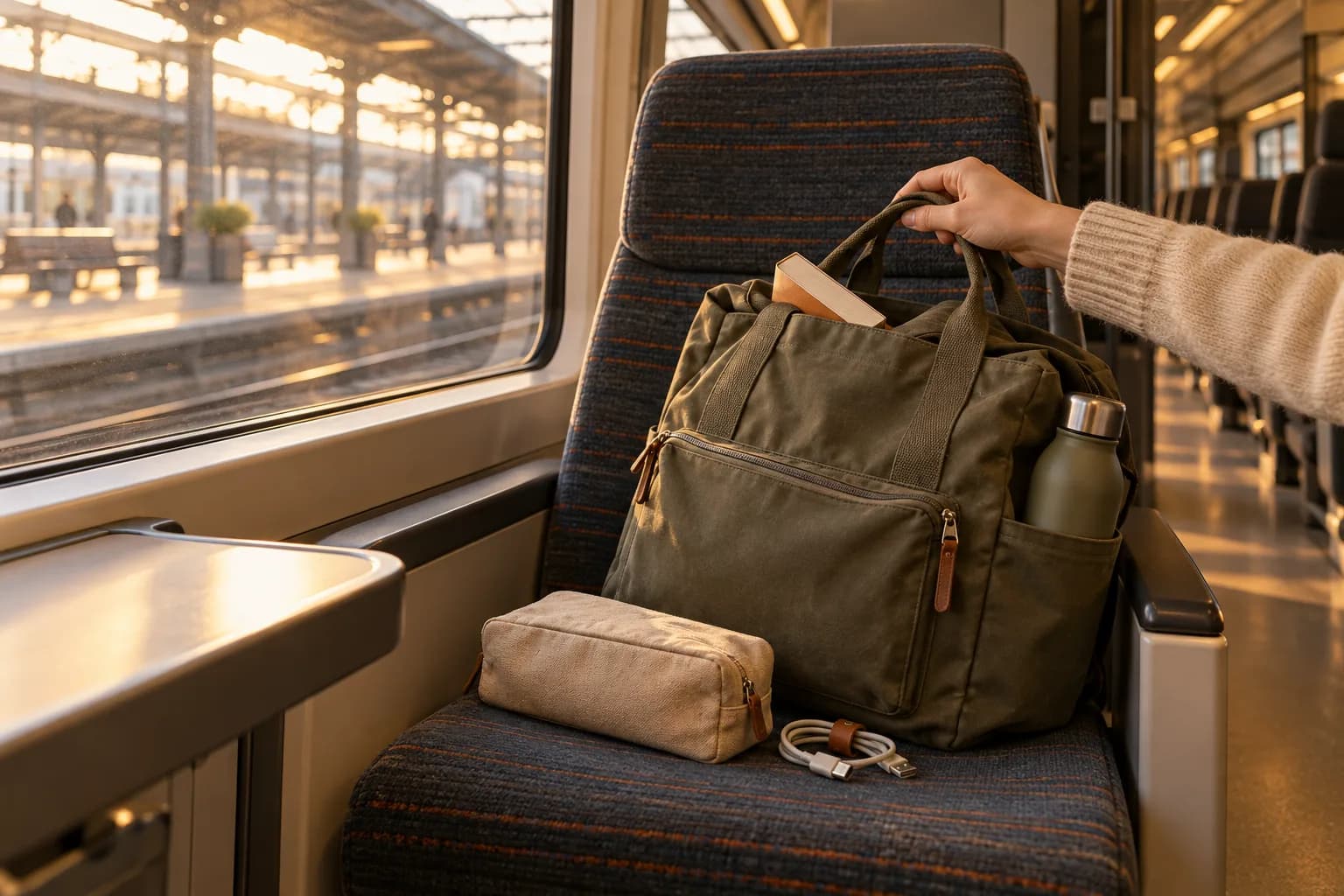
Look at the seat, tray, pockets, outlets and any storage area you used. Disconnect cables and return the small kit to its usual carrier.
- 03
Leave with a manageable group
Close the bag, keep your next ticket or transport information accessible and follow the boarding-area and platform directions as you leave.
Sources and next journey
Use the operator as the trip reference
Official references checked on October 9, 2026: Amtrak first-trip preparation at amtrak.com, baggage terms at amtrak.com and personal-food guidance at amtrak.com. These sources should be read with the exact reservation and current crew instructions. New accessory source: matadorequipment.com. The observed France offer is EUR 34; regional totals and delivery differ. Earlier linked product research retains its own verification dates. The rail scenes are original conceptual illustrations, while named products use official manufacturer photographs. Keep a note of what you actually reached for during the journey, then make the next seat kit smaller and more useful.