In this guide
Start with the booking
Write down the allowance before choosing the case
A useful carry-on is the bag you can take on your actual itinerary and comfortably use between flights. Start with the operating airline for every leg, your fare or purchased baggage option, the allowed number of pieces, external dimensions and any weight limit. Note whether a small under-seat bag and a larger overhead case are separate allowances. The word cabin on a retailer page cannot answer those booking questions. IATA explains that baggage rules are set by airlines and vary with the purchased product and route: iata.org. Keep the relevant booking confirmation and carrier page together. If you regularly fly several airlines, choose against the most restrictive itinerary you realistically intend to use, rather than the largest allowance you can find.
The six checks in a useful buying order
- 01
Booked allowance
Record the permitted pieces, complete external size, weight and any cabin-bag purchase for each operating carrier.
- 02
Filled external fit
Include the wheels, handles, front pockets and any expansion you will actually use.
- 03
Packed weight
Subtract the empty bag from the allowance, then weigh the complete everyday load.
- 04
Access and carrying
Rehearse the opening space, travel-day retrieval, stairs and transfers you expect.
- 05
Organization
Check the real packing layout and closure rather than comparing published liters alone.
- 06
Ownership cost
Compare the price with usable repair support, warranty exclusions, returns and service costs.
Measure the whole object
Check normal and expanded dimensions separately
Compare each external dimension with the carrier's limit; matching an approximate total or a nominal inch label is insufficient. Include wheels, handles and projecting pockets. For a soft bag, measure it with the intended load because a flat measurement does not describe a bulging front pocket. An expansion zip creates another packing configuration that needs its own fit check. Keep the normal and expanded figures separate on your shortlist. A bag that works on an outbound flight may need to stay unexpanded after shopping or laundry. The personal-item sizing guide explains the separate under-seat decision at Personal Item Bag Size: Check All Three Numbers Before You Fly. easyJet's own page illustrates why small and large cabin bags must be checked against the purchased allowance: easyjet.com. Recheck the current rules close to departure.
Keep weight for your belongings
Build a packed-weight budget with your real load
Empty weight is useful when it solves a restriction you actually face. Write down the applicable allowance and subtract the case's empty weight; the remainder must accommodate everything packed inside. As an illustration, a 7 kg allowance with a 3 kg case leaves 4 kg for contents. Neither figure is a universal airline rule or a suggested product specification. Weigh your complete load, including cables, a jacket, toiletries and anything stored in the external pocket. Consider whether another permitted piece has its own limit or shares a combined allowance. The Samsonite Proxis Spinner Expandable 55 cm record and its linked review offer a weight-focused example to inspect at Samsonite Proxis Spinner Expandable 55 cm. Evaluate its complete fit and price alongside the weight, rather than treating one appealing number as the whole decision.

Match the route between flights
Choose wheels and handles for the transfers you make
Picture the journey from home to the accommodation, including stairs, platform changes, uneven pavement and storage during a bus or train connection. A spinner format can be convenient on a smooth floor, while a trip with repeated lifting makes the filled weight and usable grab handles especially relevant. Check whether you can lift and carry the intended load comfortably; an empty showroom roll does not answer that question. Inspect the handle's reachable positions, the wheel clearance and the information available about replacement parts. The RIMOWA Essential Cabin research page is one alternative to inspect with this same checklist at RIMOWA Essential Cabin. A higher price should correspond to a benefit that matters to your travel routine, and service access needs to work in the country where you would seek it.

Rehearse the opening
Try access before choosing the biggest capacity number
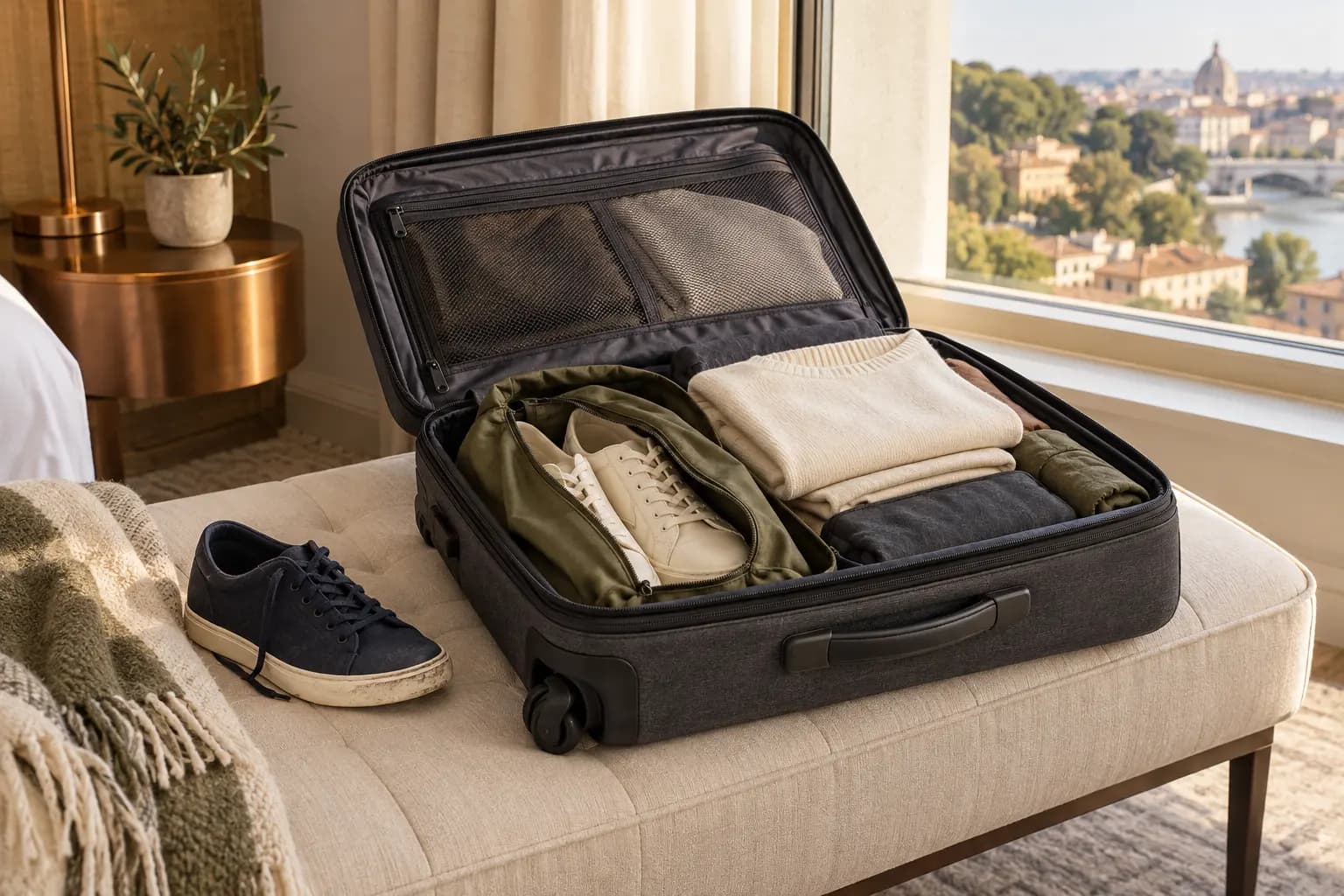
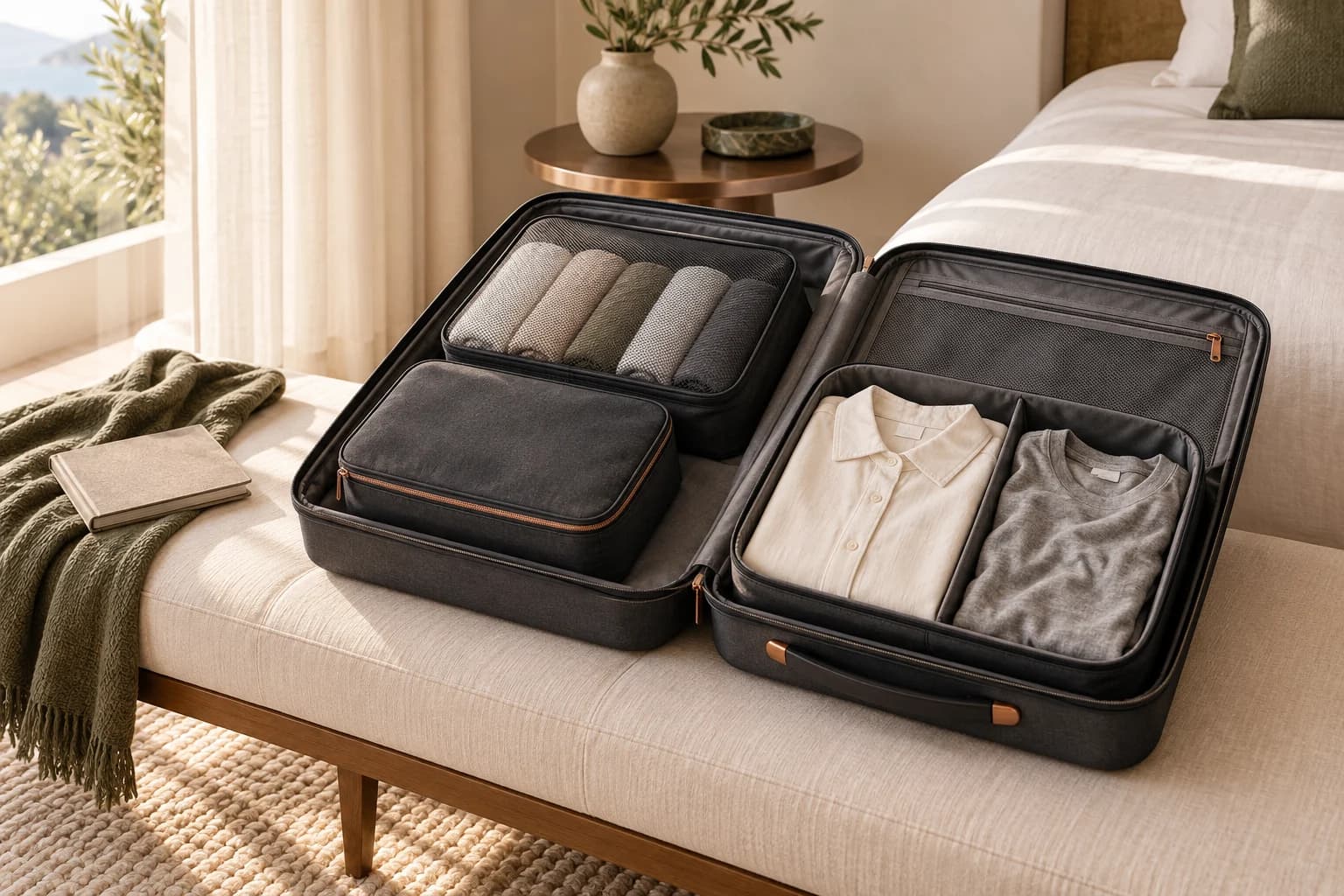
A clamshell opening, a single main compartment and a front-access pocket require different space and retrieval routines. Consider a narrow hotel room, an early departure while someone else is sleeping, and a station stop where you need one item quickly. Make a small kit of what must remain accessible, then decide whether it belongs in the case or a separately permitted day bag. Packing cubes can help organize a load, but they cannot increase an airline allowance or guarantee that a stiffly packed case closes within its limit. Use the packing-cube decision guide at Packing Cubes for Carry-On Travel: Organize, Compress or Separate? for organization, compression and separation. Check actual shoes too: How to Pack Shoes in a Carry-On: Fit, Separate and Dry. Compare published capacities cautiously because measurement methods and the space occupied by pockets or handles differ.
Compare construction fairly
Read materials and ownership terms as separate decisions
A shell-material name describes part of the construction, rather than proving how a complete case will perform. Look at the closure, corners, handles, wheels and documented repair route as a system. The American Tourister Soundbox Spinner 55 cm is another researched option to compare at American Tourister SoundBox Spinner 55. Read the current manufacturer terms for the exact market before deciding what a warranty is worth. Separate manufacturing defects, wear, transport damage and any optional additional service; a long headline duration does not mean every incident is covered. Check proof-of-purchase requirements, where a claim goes and who pays shipping. Retain your receipt and any applicable registration confirmation. Price belongs in the same decision, including the baggage option your booking requires, rather than being compared in isolation.

Make the final choice
Keep the shortlist small and trial-pack before committing
Reduce the choice to two or three cases that satisfy the booked allowance, then compare the same complete load in each format where a return policy or shop visit allows it. Check filled dimensions, total weight, closure pressure, access and lifting. A case with fewer features can be the better purchase if it meets those needs without making the trip harder. Before ordering, verify the exact model and variant, current regional price, availability, return conditions and repair terms through the researched product's official offer. This guide was expanded on 19 October 2026 while retaining its original publication date. The carrier links above were checked for the decision method; the allowance in your own booking remains the one to follow. Keep the shortlist notes for your next trip so the purchase solves a recurring need.