
In this guide
Start with the problem
A packing cube should earn its space
Packing cubes work best when you can name the problem they solve. Perhaps you keep searching for a shirt beneath several loose layers. Perhaps a soft clothing bundle uses the space where your jacket needs to go. Or perhaps you arrive home with worn socks mixed into clean clothes. Those are different jobs, and buying the largest matching set does not automatically solve all three. Lay your normal travel clothes out first, remove duplicates and look at the inside of the bag you actually carry. A useful organizer turns that existing load into a group you can find, lift out or keep apart. It should not become a reason to pack more. Start with one job, then add another type only if your trip needs it.
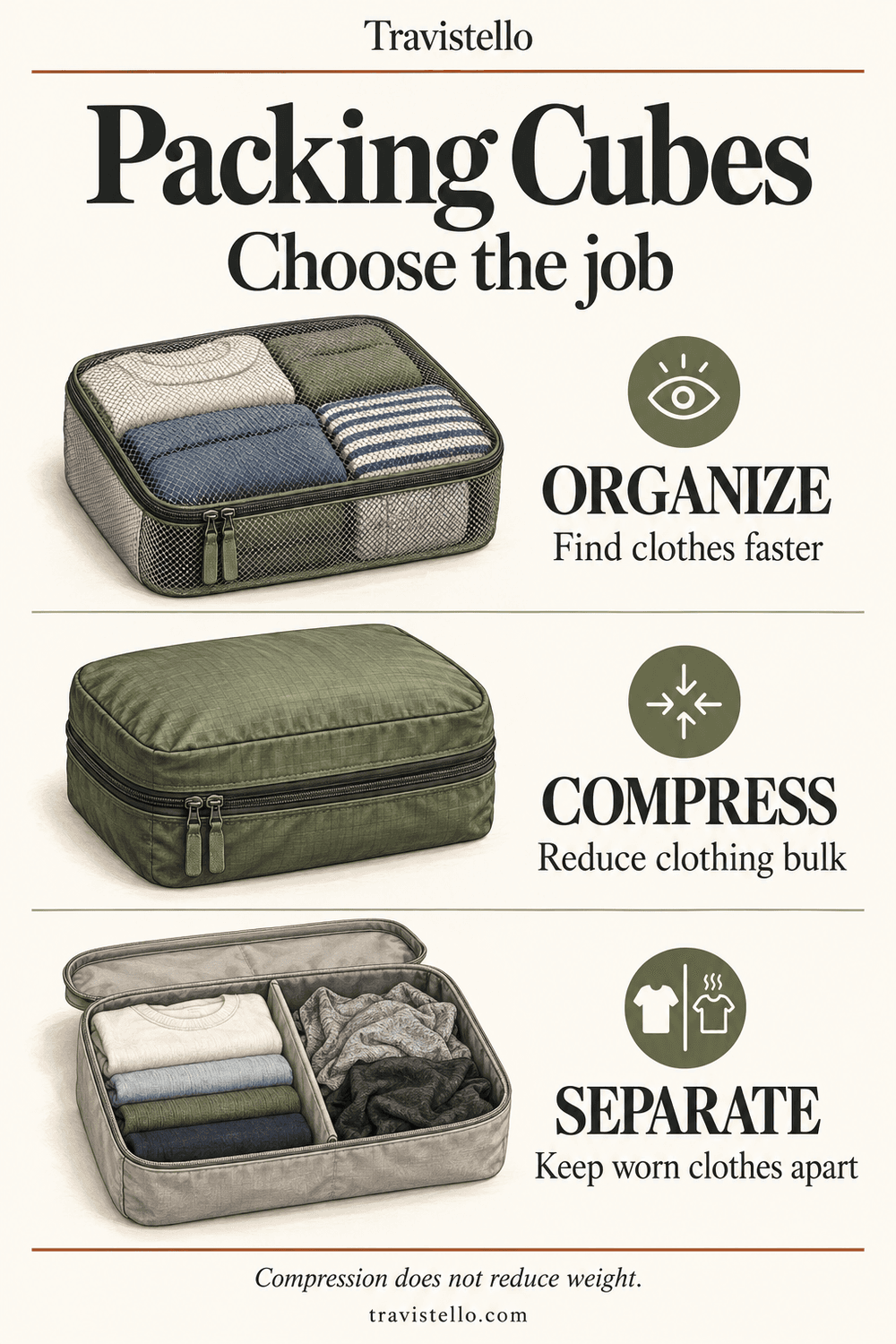
Choose one of three packing jobs
- 01
Organize
Use a regular cube when the priority is finding and removing one clothing group. A mesh window or clear access layout helps you identify that group. Choose its footprint for your bag, not for an advertised number of outfits.
- 02
Compress
Use a compression design when soft clothing bulk is the specific problem. Look for the actual mechanism, such as a second perimeter zipper or external straps. Neither mechanism removes the weight of the clothes you put inside.
- 03
Separate
Use a divided cube or independent organizers when clean and worn clothing should stay apart. A divider shares the same total envelope; it does not create two full-sized capacities. Physical separation is different from waterproof or odor-proof containment.
Useful visibility
Regular cubes keep a clothing group together
A regular cube can make sense even when your suitcase already closes comfortably. Group the things you reach for together, such as underwear and sleepwear, instead of filling an organizer with unrelated items simply because there is room. The existing Eagle Creek Reveal Cube M research page is an example of a mesh-front organizer with an angled opening and handle. Its job is visibility and grouping. At a hotel, you can lift that group into a drawer or keep it in the open bag. For a small personal item, try fewer groups before using several cubes. Toiletries, shoes and the things you need during a flight have different access or containment requirements; they should not disappear inside the clothing bundle.

Choose a mechanism
A zipper and a strap solve compression differently
A zip-compression cube has a second zipper path that draws its flexible sides together after the main compartment is closed. The existing Isolate Compression Cube S research covers one small example. Keep fabric clear of the zipper and reduce the contents if closure needs force. Strap compression can secure a wider variety of gear shapes, but the result still depends on what you load. Matador's Gear Cube Set uses external straps, bucket-style top openings and grab handles. Its three sizes can become separate clothing or equipment groups that move between a larger bag and accommodation. It publishes no compressed-volume percentage, so a promised saving would be invented. Choose the access layout you want during the trip, rather than comparing two different mechanisms through an unsupported percentage.


Fit the pieces
A three-cube set is three separate decisions
Before choosing a set, map each piece onto the usable interior of your bag. Allow for handles, curved corners, internal dividers and the items that stay outside clothing storage. Matador publishes Gear Cube capacities of 8, 5.5 and 3 liters, with separate component weights of 94, 87 and 79 g. The summed totals describe the set's pieces, not one 16.5-liter compartment or a measured packed weight. You can take only the piece or pieces your route needs. Its wide top access suits moving separate groups, while a light divided clothing cube suits a different routine. A set that looks economical is useful only if its pieces fit and will be used. Leave a clear place for the layer you may remove during travel.
Test the return-trip layout before leaving
- 01
Pack the normal load
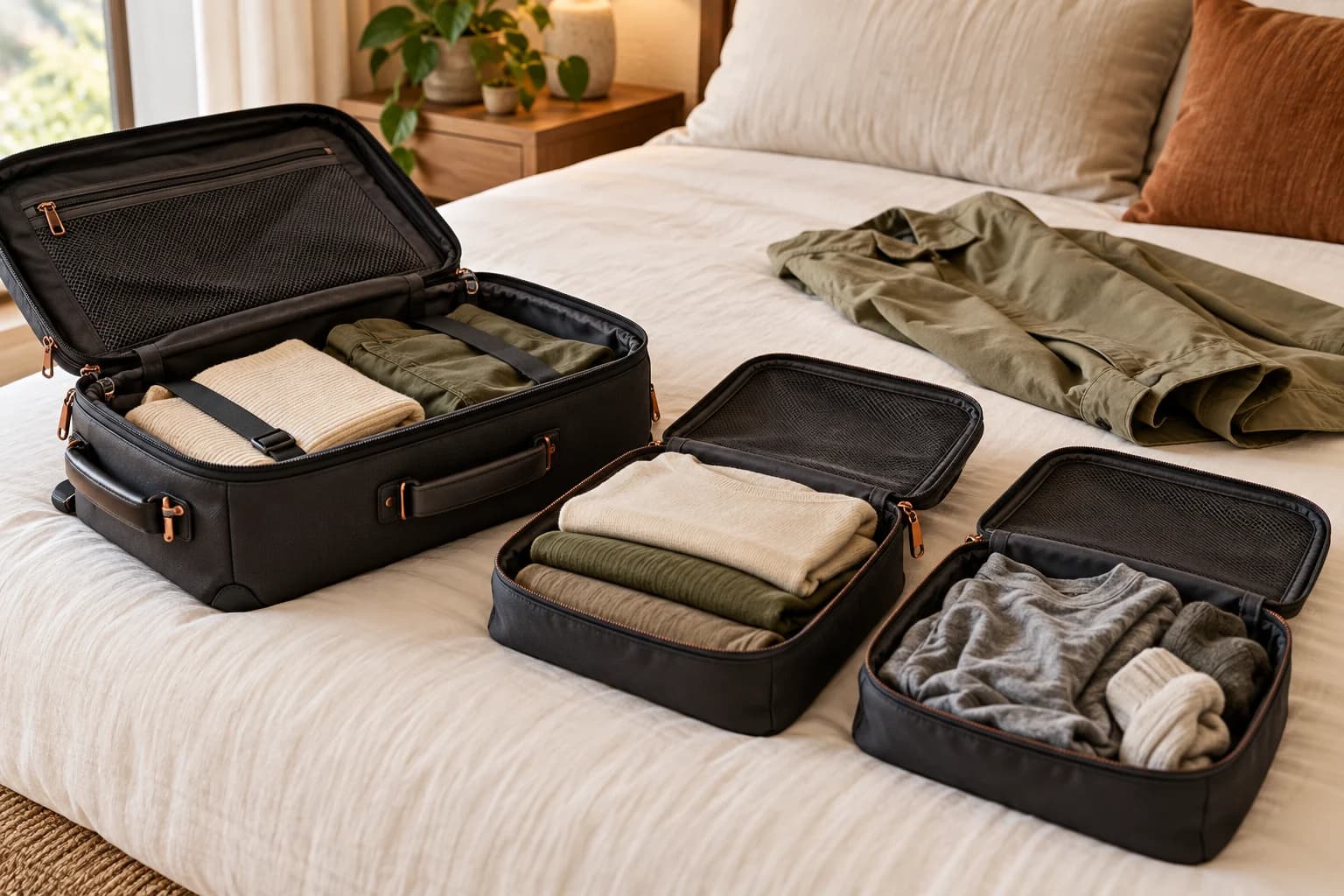
Put your realistic clothing group into the chosen organizer and close it normally. Place it in the actual bag alongside shoes, toiletries and travel-day essentials. Remove optional clothes if the system depends on forcing zippers.
- 02
Retrieve one item
Take out a shirt or a pair of socks without dismantling everything. If the item is hard to find, change the grouping or opening direction. Test access while the other packed pieces remain in place.
- 03
Simulate the worn-clothing split
Move part of the clothing group to the space reserved for worn items. Check that the bag still closes and that clean clothes remain easy to reach. Keep the system workable when the neat departure folds have changed.
Care and ownership
Read the care label and the actual regional offer
Fabric descriptions tell you about construction, not every condition in which the full organizer can protect its contents. Matador's Gear Cube FAQ allows cold machine washing and hanging to dry, while excluding sustained heavy rain and submersion. Follow the instructions for the exact organizer you own; another cube's cleaning method may not apply. Check the merchant's currency, shipping region and current availability before comparing prices. The Eagle Creek offer recorded for the Black clean/dirty cube is from the US website, which explicitly does not ship those orders to France. Matador's observed France offer is in euros. The research pages retain those regional differences and their dated checks, alongside warranty coverage and exclusions.
Sources and selection
Choose the job, then the product
The three-job framework and return-trip exercise are Travistello editorial recommendations. New product specifications, exact Black variants, regional offers and warranty terms were checked against the manufacturers on October 6, 2026. Existing linked research retains its own recorded dates. The suitcase lead and decision graphic are original conceptual artwork; named product photos come from their manufacturers. Official sources: eaglecreek.com and matadorequipment.com . Each supporting product page gives the exact variant, source differences and ownership terms. Start with the organizer you already have if it solves the job. The useful result is a bag that is easier to use throughout the journey.


