In this guide
Start with the spare pair
Choose shoes for the itinerary before choosing a bag
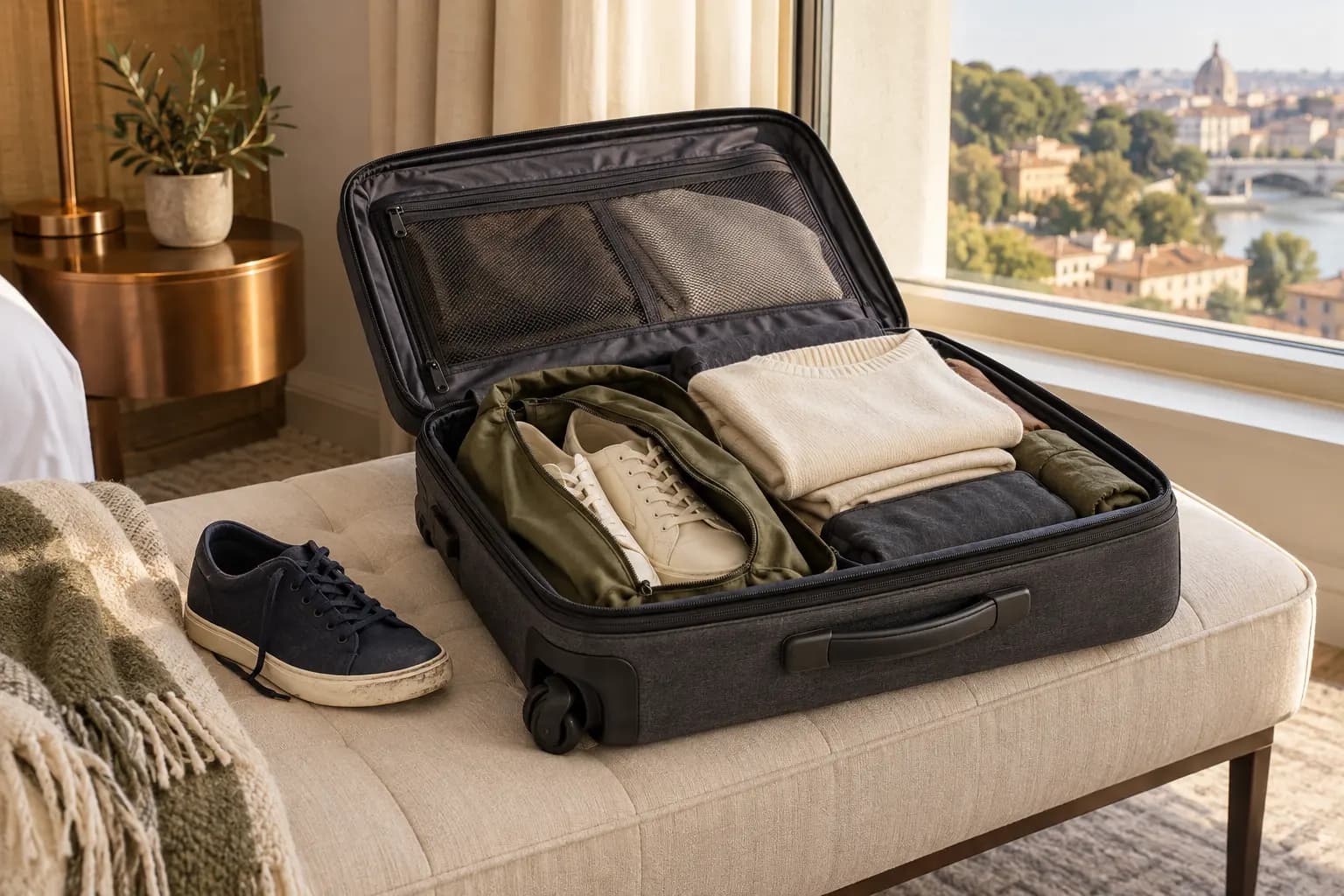
To pack shoes in a carry-on, first decide which pair you will wear and which spare pair genuinely earns its space. Then test the spare shoes in their normal shape, cover dirty soles and check the complete filled case. A shoe bag organizes footwear; it does not make a rigid sole shorter or create another airline allowance. Write down the actual activities: city walking, a specific dress requirement, a water activity or an operator's equipment requirement. Look for overlap between pairs you already own. Wear a comfortable suitable pair for the journey rather than choosing travel-day shoes purely because they are the largest. The Iceland outfit guide at travistello.com covers a separate weather-and-layers decision; this guide solves how the footwear you choose travels between stops.
Use three checks before closing the case
- 01
Actual-pair fit
Place both real shoes in the proposed bag or case space. Close the zipper normally without bending rigid parts or crushing the uppers.
- 02
Sole separation
Keep used soles away from clean clothing, including when retrieving one shoe or repacking after a day out.
- 03
Damp-shoe arrival plan
Know where you can unpack footwear after arrival. A closed shoe bag inside a closed suitcase is not a drying arrangement.
Make a trial pack
Check the actual shoes, not just the stated liters
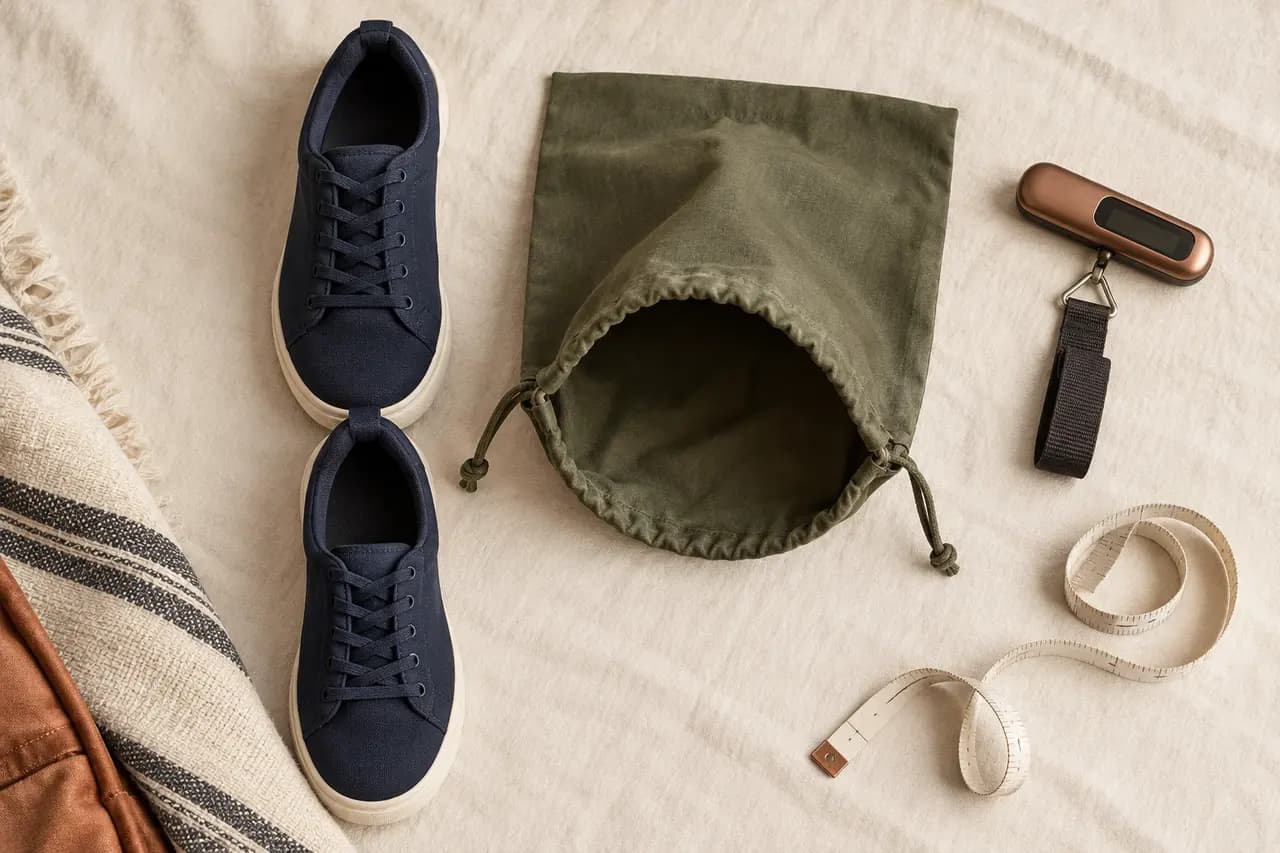
Lay both shoes beside the proposed pouch and test a normal placement. Heel-to-toe may help some shapes; side-by-side may suit another pair. Keep the manufacturer's shape and care instructions in mind, particularly for structured uppers, dress shoes or boots. Close the bag without pulling against its contents, then put that filled bag into the case with the rest of your real kit. Published maximum dimensions can rule out an obvious mismatch, but they do not describe the usable opening or how a particular curved pair fits. A liters figure is even less informative about a long sole, high ankle or bulky heel. Before buying online, use the seller's actual return conditions to decide how a fit check would work. Do not assume that two bags marked nine liters hold the same shoes.
Use what already works
A suitable reusable bag may be enough
A clean reusable bag you already own can be a sensible starting point for dry spare footwear. Inspect it for holes, make sure it closes or folds securely enough for your packing method, and keep the outside clean when inserting used shoes. A thin bag may offer little shape protection; a mesh one leaves openings through which moisture or dirt can reach other items. Those are different jobs from simply keeping two dry soles off a shirt. If the shoes need stronger shape support, use the footwear maker's suggested storage approach rather than improvising heavy pressure from other luggage. The packing-cube decision guide distinguishes organization from compression. Neither an ordinary clothing cube nor an extra layer of fabric guarantees waterproof separation.
A light single-compartment option
When the Peak Design Shoe Pouch fits the job
The Peak Design Shoe Pouch publishes a 48 g weight, nine-liter capacity and maximum dimensions of 32 x 17 x 17 cm. It packs into its own storage pocket. That makes it a concrete option to trial with a compact spare pair when an empty organizer also needs to pack away. There is no stated internal shoe divider, and Peak Design's one-to-two-pair description remains dependent on shoe size. The selected Eclipse European page displayed EUR34.99 when checked; its public structured data carried a different price, recorded on our product page. Use the current visible regional offer before buying. The light fabric and zipper should be treated as organization features, not proof that damp shoes can be sealed beside clean clothing.

A divided two-pair option
When the Eagle Creek Multi Shoe Cube earns its space
The Eagle Creek Pack-It Reveal Multi Shoe Packing Cube adds an internal divider and a mesh visibility panel. Its published metric footprint is 34 x 22 x 14 cm, with 113 g empty weight and 9.4 liters of calculated capacity. The selected Citrus Orange US offer was USD25. These are different currencies and storefronts from the Peak Design observation, so they are not a direct price comparison. Eagle Creek's two-pair guidance needs checking with your shoes, especially bulky shapes. Choose the divider because it solves a real organization need, rather than packing another pair simply because the bag is advertised for two. Mesh helps you see the contents; it does not make the organizer waterproof.

Keep the clean side clean
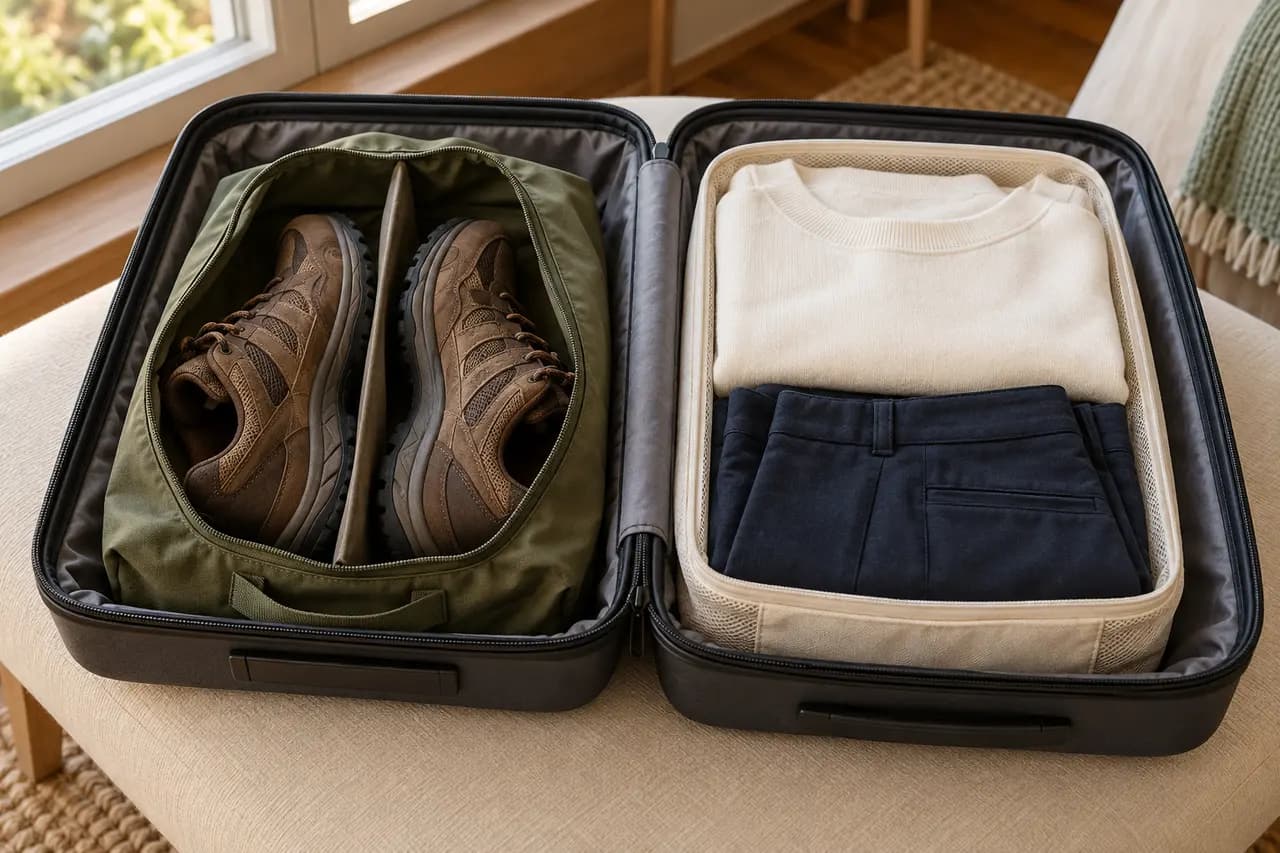
Separate soles through both packing and retrieval
Place the shoe group apart from the clean-clothing group and check that no sole or dirty pouch surface contacts the clothes as you close the case. If you use the existing Eagle Creek Pack-It Isolate Clean/Dirty Cube M for clothing, reserve its compartments for the use that actually fits your load; it is not automatically a suitable shoe container. Keep frequently needed travel items accessible without repeatedly disturbing the shoe group. Inside a wheeled case, check whether the packed footwear stays in its intended place when you stand the case upright. Inside a backpack, check both access and how the shape feels against the rest of the load. The goal is a repeatable packing routine, not a universal rule that shoes always belong at one particular edge.

Wet footwear changes the decision
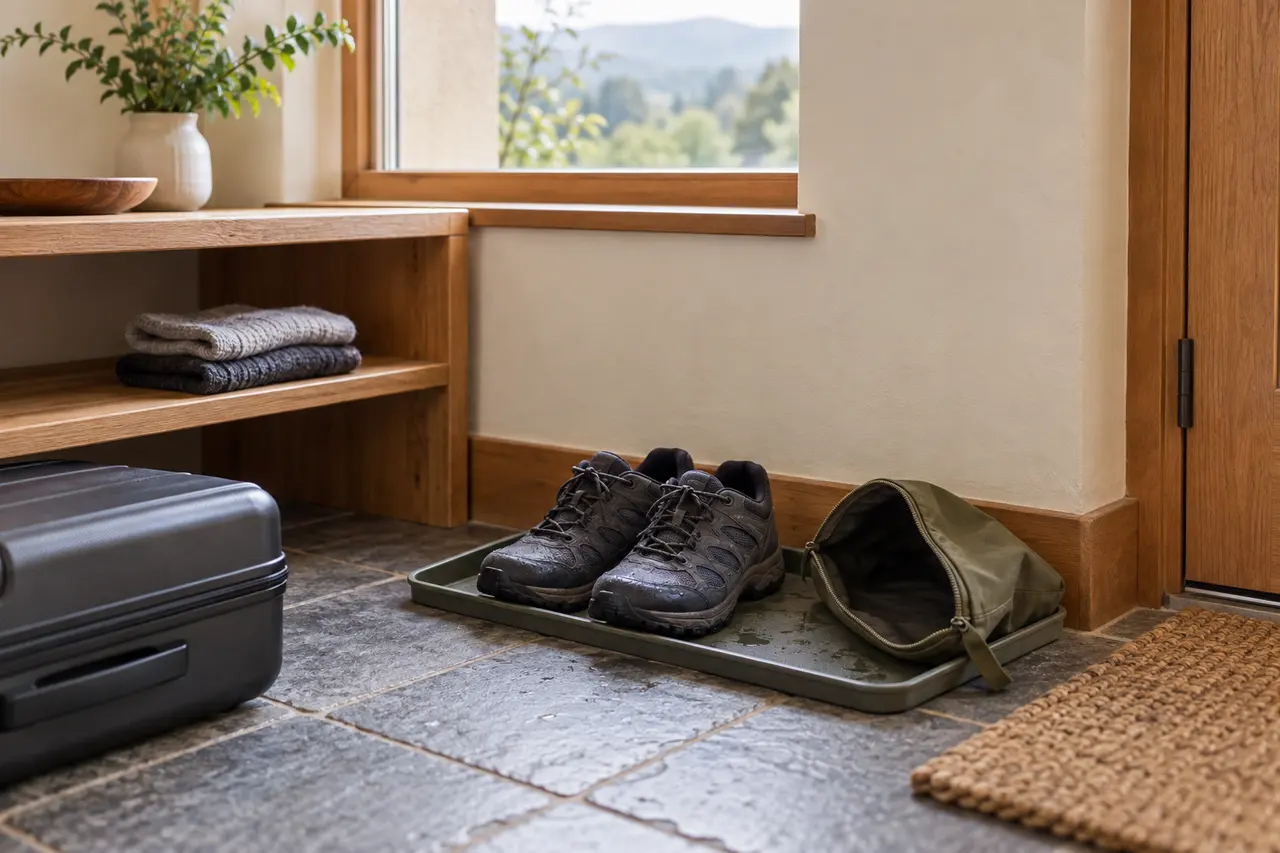
Unpack damp shoes in a permitted drying space
After rain or an activity, follow the footwear maker's cleaning and drying instructions. At the accommodation, use a designated or permitted area, protect the surface appropriately and keep damp footwear apart from dry clothing. A transfer container is useful between locations, but do not leave it closed inside the suitcase as an assumed overnight drying system. Mesh in a tightly filled case does not establish airflow around the shoes. Avoid improvising a high-heat treatment or putting shoes on a heater unless their care instructions specifically allow it. If departure arrives before the shoes are dry, reconsider the remaining packing plan and the protection needed for neighboring items. The travel-laundry guide at travistello.com covers the separate clothing wash-and-dry question; drying time is a constraint for the whole itinerary.
Check the complete luggage
Measure and weigh the filled case after adding shoes
Once the spare pair and its bag are inside, close the actual suitcase or backpack and check its filled exterior dimensions and total weight against your operating carrier and booking. Exterior bulging still matters. A shoe organizer inside the case does not add an extra cabin item allowance, and a manufacturer's bag-fit description does not establish airline approval. The personal-item sizing guide explains why all three filled exterior dimensions matter for the separate under-seat bag. Retain any footwear or equipment requirements from your activity provider. Specialized ski boots have a different transport decision, covered at travistello.com. An ordinary shoe pouch should not be selected on the assumption that it fits or protects that equipment.
Care and final decision
Choose the simplest setup that passes the checks
A suitable bag already owned is enough when it fits the actual footwear and keeps the rest of the kit clean. Buy a dedicated organizer when its opening, divider or pack-down feature solves a demonstrated problem. Check care instructions for the organizer as well as the shoes; do not infer machine-washability from the word washable. Product observations were checked on October 16, 2026. Peak Design at peakdesign.com and Eagle Creek at eaglecreek.com describe different functional warranty coverage and exclusions, with regional conditions to review before purchase. Finish with one short rehearsal: pack, close, stand or carry the case, retrieve the shoes and repack them. If that sequence works without forcing the kit, the packing method has a clear purpose.