In this guide
A city capsule with three conditions
Build an outfit that changes during the day
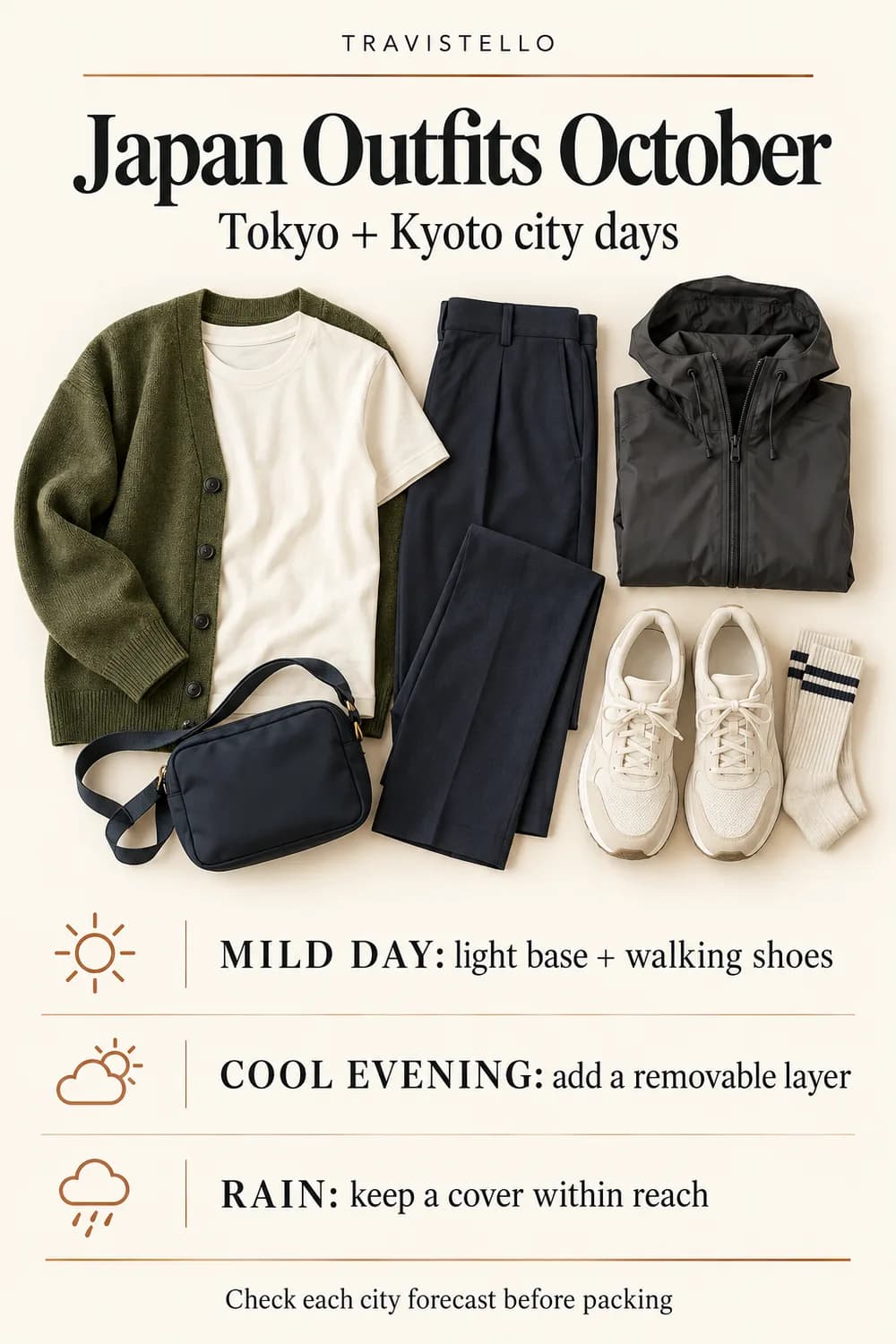
For an October trip to Tokyo and Kyoto, start with an outfit you can adjust: a comfortable light base, trousers or another familiar walking-day bottom, shoes you already know, and a removable warm layer. Keep rain protection reachable. The useful capsule makes those pieces work together instead of assigning a completely different outfit to every photograph. This guide focuses on ordinary city days with indoor stops and evenings outside. Northern Japan, mountain walking and specialist activities create different requirements, so give those parts of an itinerary their own plan. Begin with clothes that fit and feel right to you, then identify the specific gap. A new accessory is useful only if it solves that gap without making the day bag harder to manage.
Plan three versions of the same outfit
- 01
Mild walking day
Use a light base and familiar walking shoes with comfortable socks. Carry a layer that you can remove and put away easily.
- 02
Cooler evening
Add the removable layer when the forecast and your comfort call for it. Leave enough bag space for it during the warmer part of the day.
- 03
Rain
Keep the chosen rain cover within reach. Check how it works with the actual clothes and bag, and change the outing when the conditions require.
Check both cities, not a country average
Use October climate context as a starting point
The Japan National Tourism Organization's Tokyo monthly table lists October high and low references of 22 C and 14 C; Kyoto's table lists 23 C and 14 C. These are monthly context, not promised temperatures for your travel dates. The same official pages provide changing forecasts, which are the useful next check before packing and each morning. Look at the evening as well as the middle of the day, precipitation and any alerts affecting your itinerary. Do not extend this city capsule to Hokkaido or a mountain excursion simply because they share the same month. The official Japan in October overview also helps put seasonal plans in context. Keep an itinerary flexible enough to change an outdoor stop when the actual conditions make that sensible.
Small capsule, usable combinations
Choose clothes that work in more than one combination
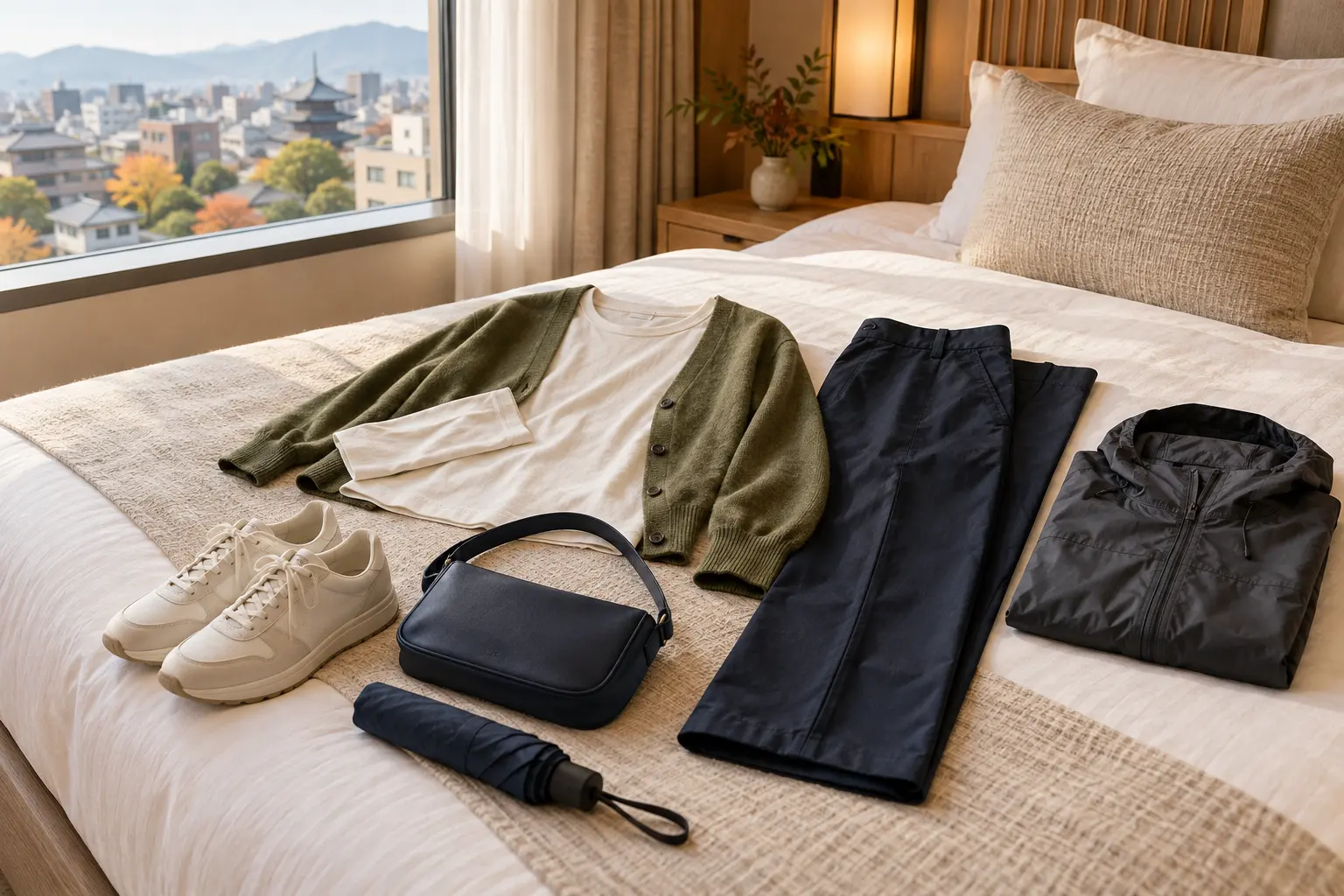
Lay out one light top, one removable cardigan or similar layer, a familiar bottom, shoes and socks. Then place your other intended tops beside that same group. Check whether they create combinations you would actually wear and whether the layer still fits over each top. A simple example is an ivory long-sleeved tee, navy trousers and an olive cardigan, with your own suitable rain jacket available for wet conditions. The colors are an illustration of coordinated packing, not a required dress code. Prefer clothes that sit comfortably when you walk, sit on a train and reach into the day bag. Use the packing-cube decision guide when grouping the capsule inside luggage; cube volume does not decide which clothes suit the trip.
Walking-day details matter
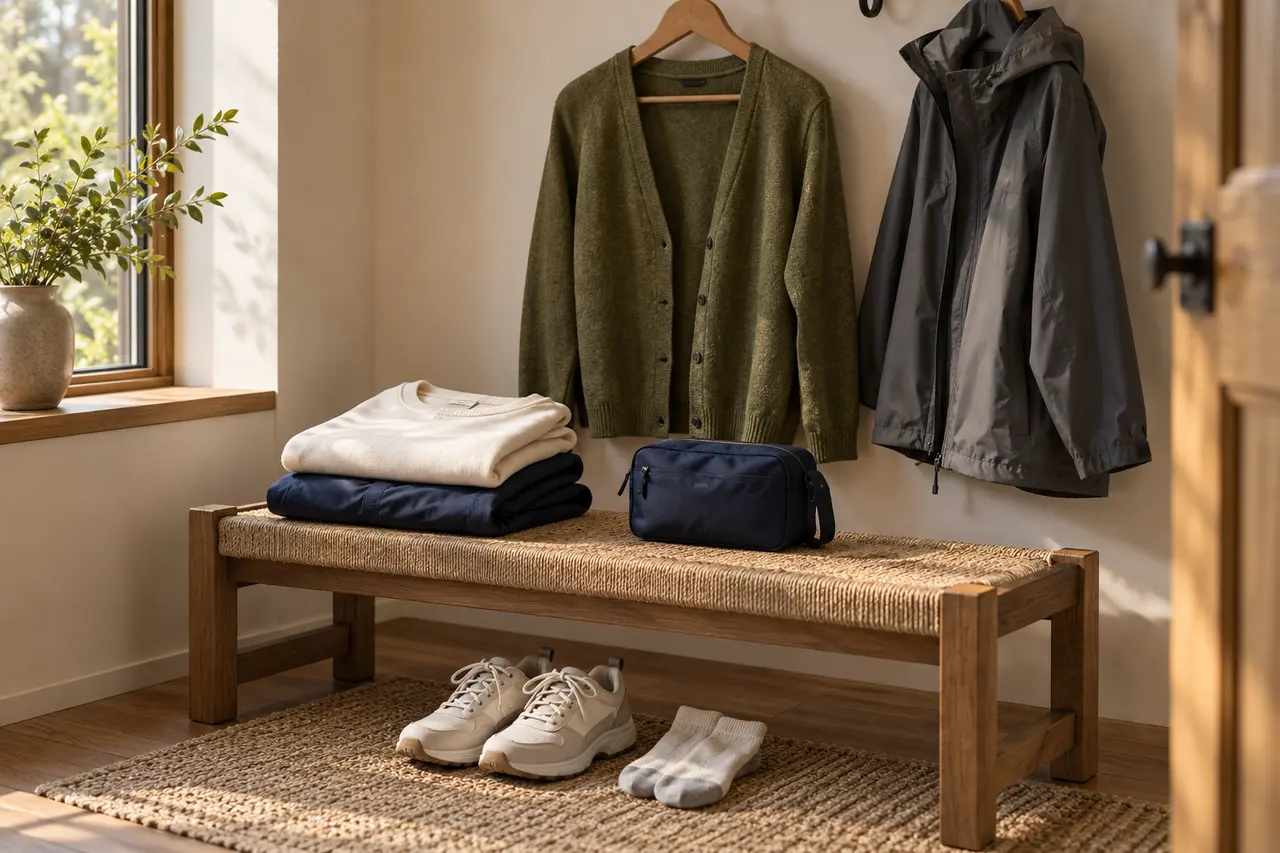
Try the shoes, socks and layer together
Use the shoes and socks you expect to wear, rather than judging comfort from a product photograph. Try the complete outfit on a familiar walk before departure and check the ordinary movements the day will involve. Consider whether a chosen bottom drags, whether a layer is easy to remove and where it goes after you take it off. If your itinerary includes a venue that asks visitors to remove footwear, a manageable shoe closure and clean socks can make that stop simpler; follow the instructions at the specific place. Keep a realistic rotation so the next day's outfit is not dependent on a wet pair of shoes drying instantly. Clothes and footwear you already trust can be more useful than a last-minute unfamiliar purchase.
One part of the outfit, not the whole plan
Choose the rain cover around your actual routine
A suitable existing jacket or umbrella may already cover the outing. A poncho offers a different loose shape, and its usefulness depends on movement, bag fit, access and the conditions. The Sea to Summit Ultra-Sil Nano Poncho research covers the Blue variant, with 15D nylon, taped seams and side press studs. The official table states 130 g weight; Highlights separately labels 145 g packed weight and 13.5 x 6.5 x 6.5 cm packed size. Preserve those labels rather than guessing the weight of the sack. Its nylon is not breathable according to the manufacturer, and this version is not a tarp. If the compact bundle solves an actual need, check the supplied instructions and try it with the outfit and bag before relying on it.

Price and packed bulk are different choices
Compare a larger rainwear alternative carefully
The Sea to Summit Nylon Tarp Poncho research covers Green. Its official table states 420 g weight, with 435 g separately labelled packed weight and 19 x 8 x 8 cm packed dimensions. It uses 70D coated nylon and taped seams. The observed US offers checked October 14 were USD77.95 for this version and USD111.95 for Nano. That is a current source comparison, not a permanent price promise. The Nylon version has a manufacturer tarp-conversion feature, but a city itinerary does not make that extra role necessary. Its FAQ says it is not designed for very windy conditions, and the fabric is not breathable. Choose on the relevant packed size, fit and limitations. A smaller bundle alone does not establish better coverage, and a lower price does not resolve suitability.

Carry the layer without rebuilding the trip
Give the day bag space for the changing outfit
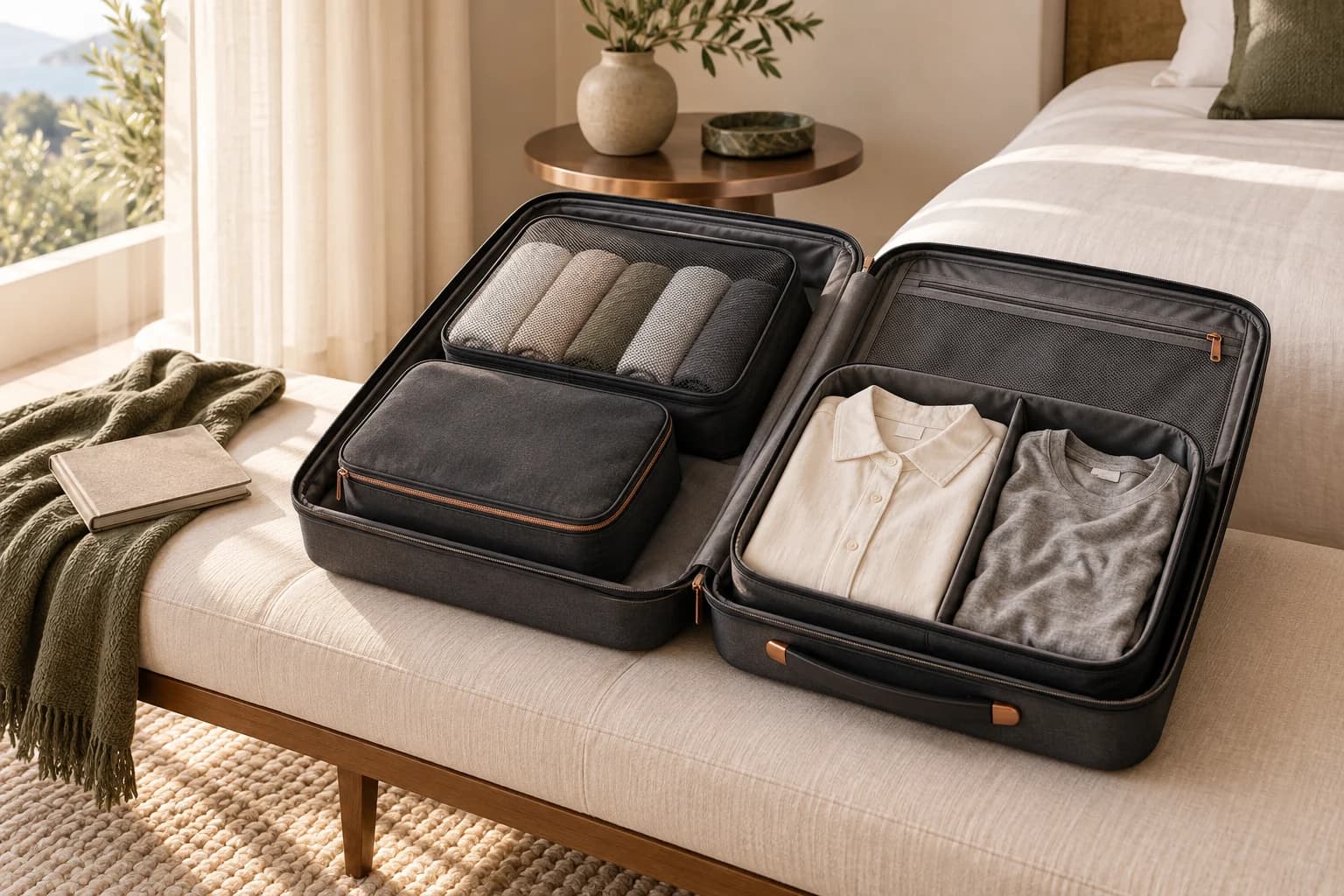
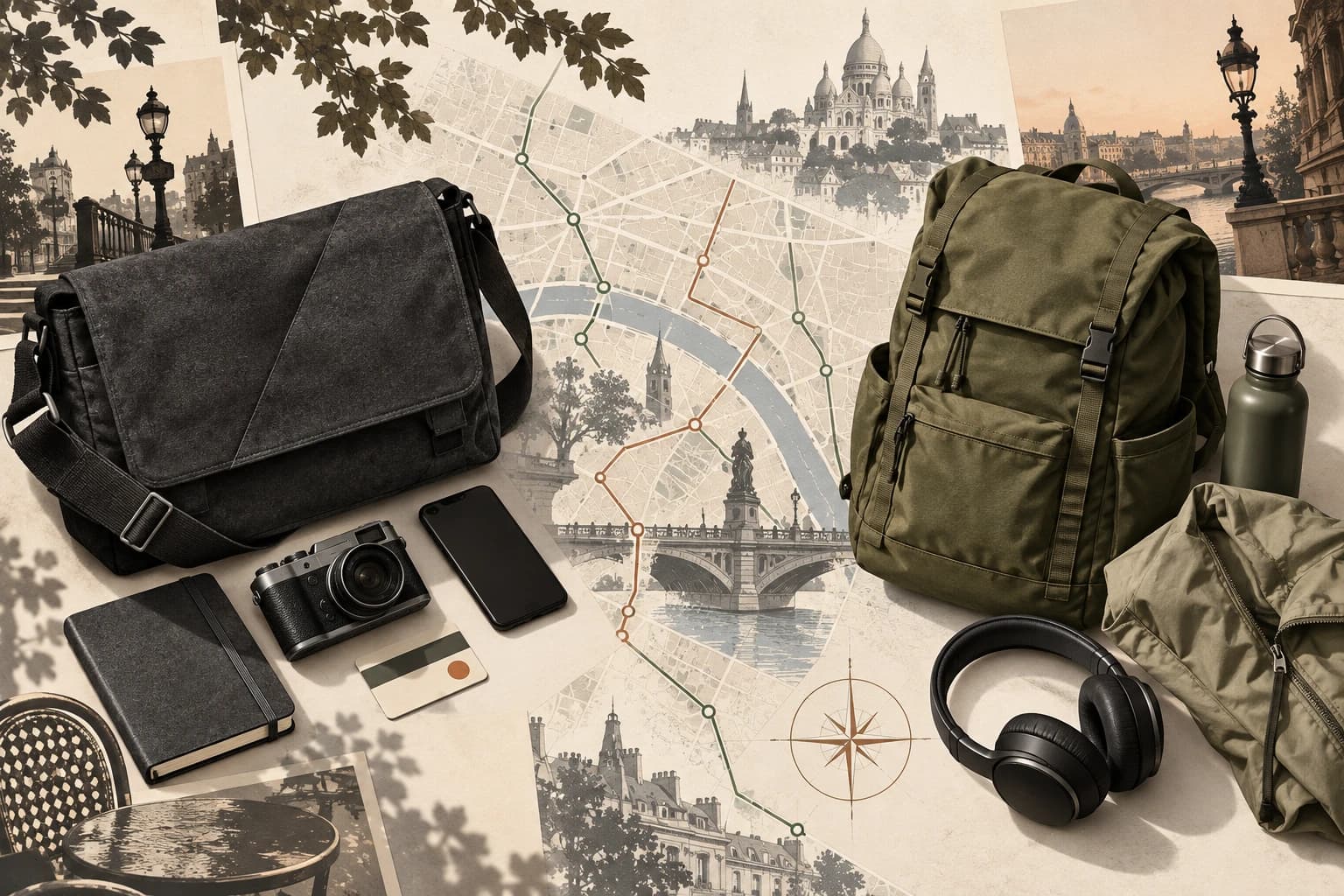
Set out the bag with the removable layer and ordinary essentials you plan to carry. Keep the rain cover accessible when it is needed, without emptying the whole bag to retrieve it. The city carry guide helps choose between a messenger bag and backpack if your existing setup feels unsuitable. The Sea to Summit Ultra-Sil Daypack research is an existing packable bag reference. Its own weather FAQ calls it water-resistant only, with unsealed seams and a zipper that can admit water. Keep its source date and that limit visible; a separate cover does not make every part of the bag waterproof. The existing Eagle Creek Pack-It Isolate Clean/Dirty Cube M research offers separation inside the main luggage. Keep dry clothes separate from wet outerwear, and use storage appropriate to the garment's care instructions. Avoid treating an ordinary organization pouch as a guarantee against water reaching sensitive belongings.


Reset before tomorrow's city day
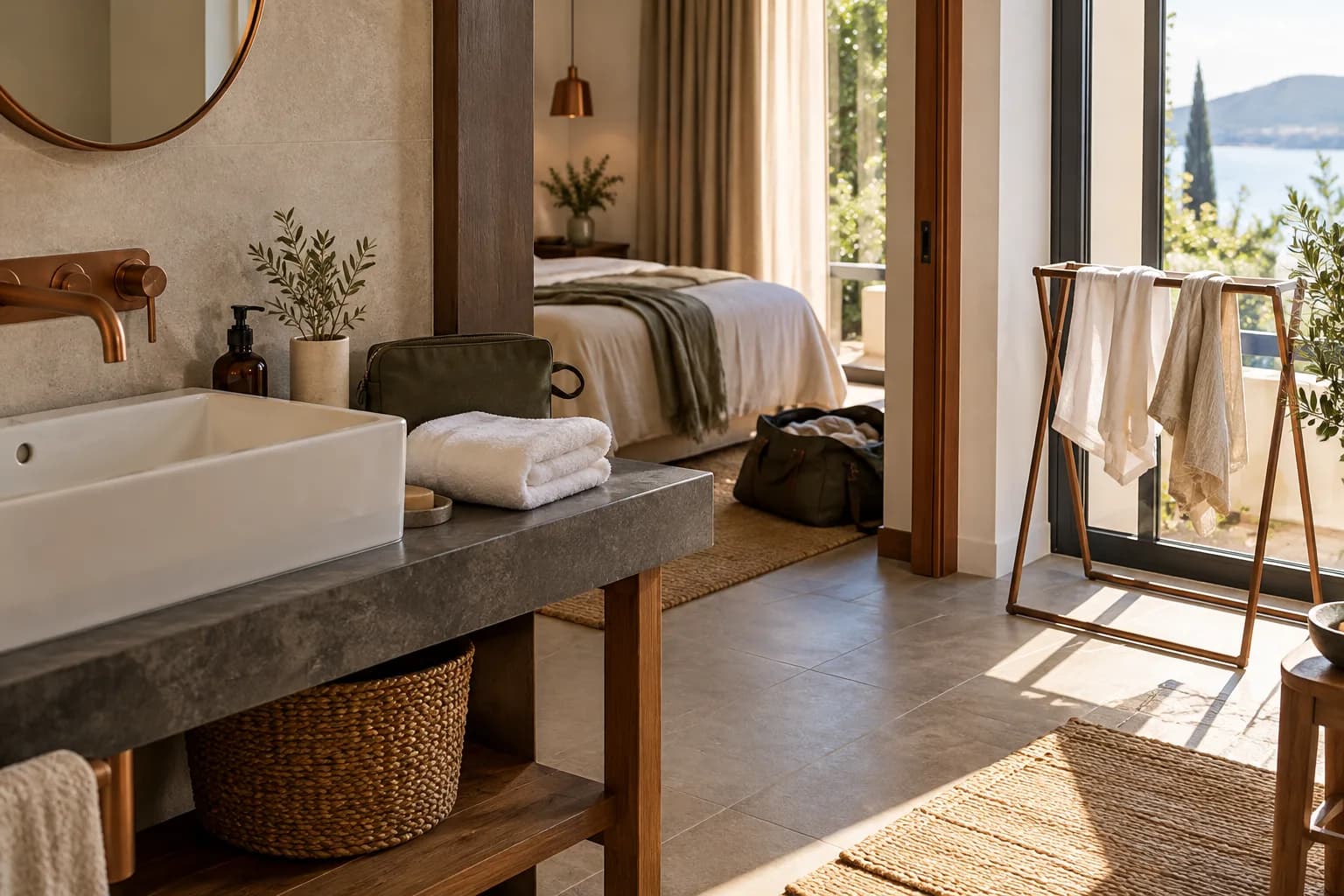
Give damp gear time and a permitted drying place
After a wet outing, follow the garment instructions and the accommodation's rules before arranging drying space. Keep damp outerwear apart from the dry capsule, and let suitable items air in a permitted location with enough space around them. Do not plan tomorrow around an assumed drying time. The travel-laundry guide at travistello.com covers the separate decision of washing clothes and allowing them to dry before packing. If a planned piece is still damp, use another suitable combination or adjust the schedule. Recheck the next city's forecast when moving between Tokyo and Kyoto. A flexible capsule works best when you know which layer is dry, which shoes are available and which outdoor plans can shift without disrupting the entire trip.
Sources and the final packing check
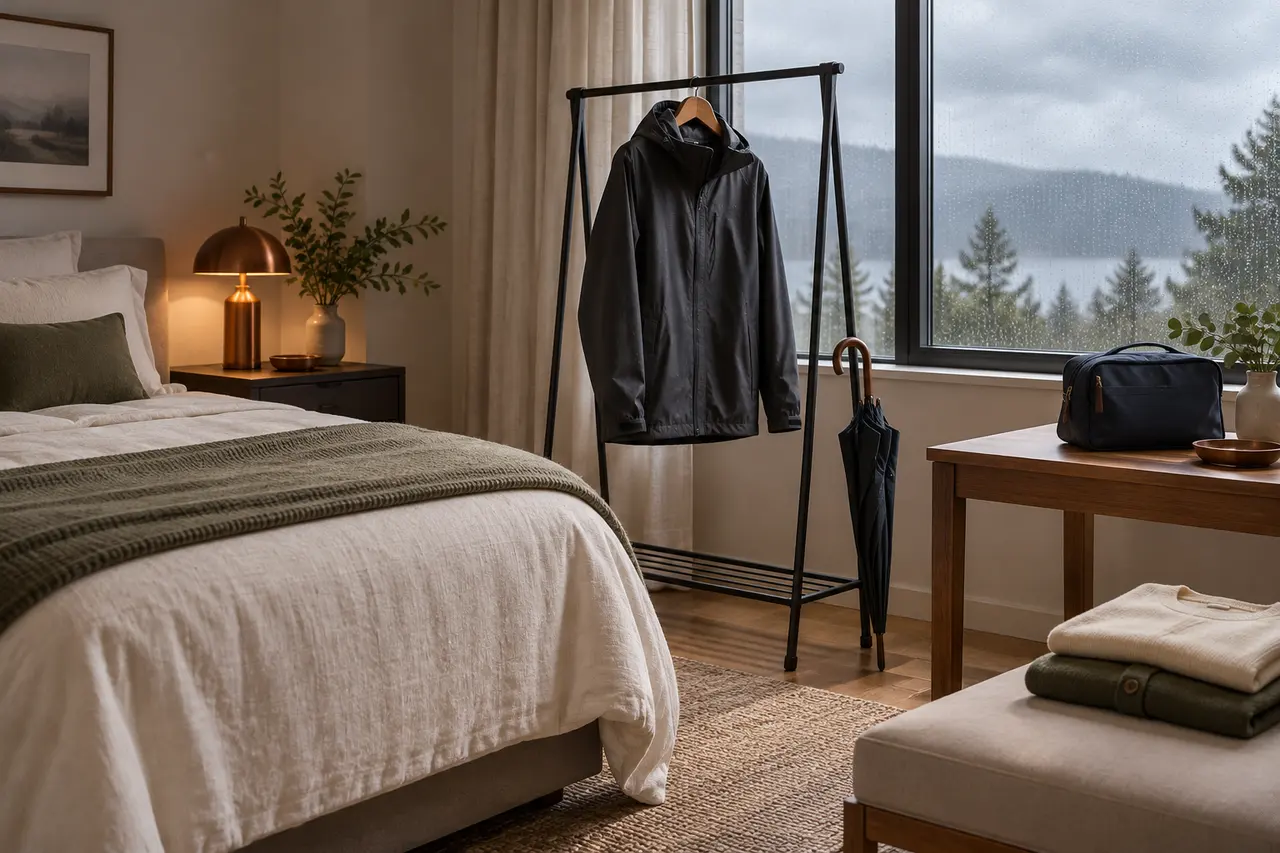
Pack for your dates, places and comfort
Official sources checked October 14, 2026 include the JNTO October overview at japan.travel, Tokyo weather at japan.travel and Kyoto weather at japan.travel. Product sources are seatosummit.com and seatosummit.com, with terms at seatosummit.com. The product records preserve exact variants, separately labelled weights and current US offers; regional eligibility and totals can change. Sea to Summit's warranty covers stated manufacturing defects under conditional usable-life terms, with exclusions for wear, misuse and other stored products. Read the full policy before buying. Original outfit and room images are conceptual illustrations; named rainwear photographs come from the manufacturer. Before closing the luggage, check that every top works with the walking-day group, the evening layer is manageable, and the rain plan remains reachable. Make the final choice from the actual forecast and the clothes you can comfortably use.