In this guide
Pack for the whole visit
Start with swimwear, dry clothes and the return journey
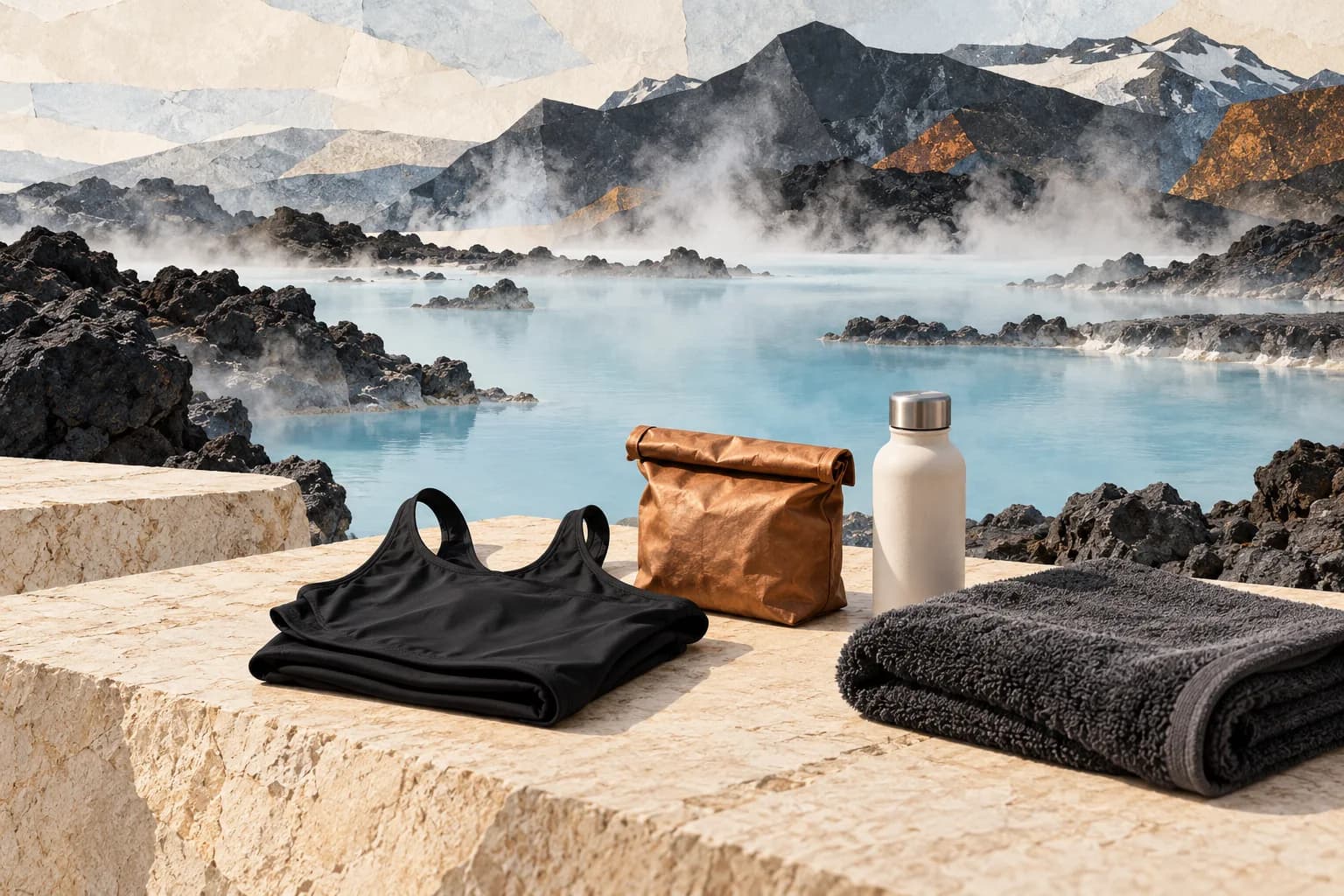
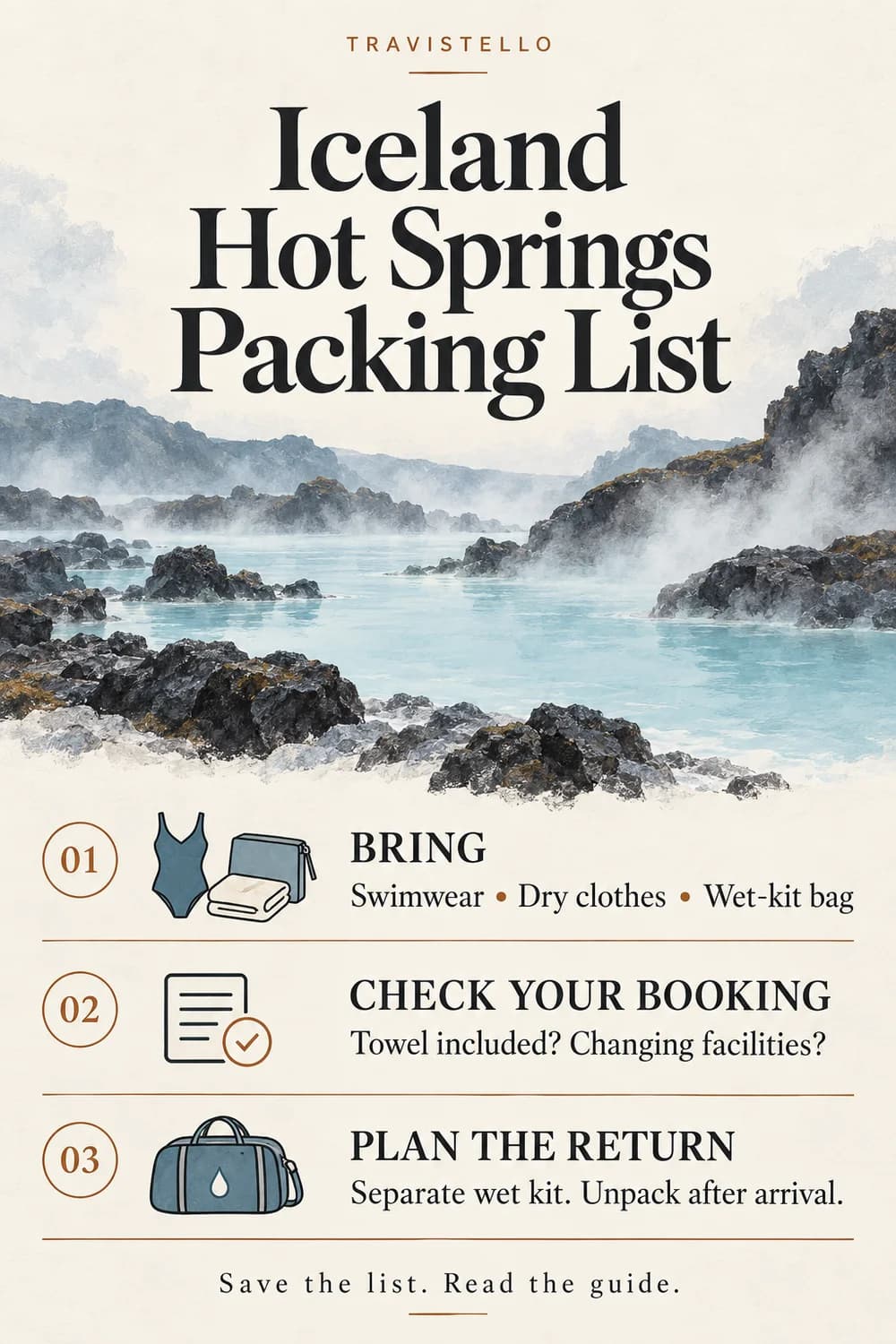
An Iceland hot springs packing list needs three groups: what you wear in the water, what stays dry for changing afterward, and how the wet kit travels to your next stop. Start with suitable swimwear, the dry clothes you will put on, booking details and a suitable reusable bag for the return. Then check your specific operator and package before adding a towel, robe or shower products. This guide focuses on booked facilities such as Blue Lagoon and Sky Lagoon. A rural pool can have very different access and facilities, and an unmanaged spring is not interchangeable with an operated lagoon. For the clothing you wear outside the facility, use our Iceland outfit packing guide at Iceland Outfit and Packing List: What to Wear in Wind and Rain. Keep the pool kit together inside that wider weather plan.
Use this bring, check and return checklist
- 01
Bring
Suitable swimwear, dry clothes, your booking details and a suitable bag that can keep the wet kit apart during transit.
- 02
Check the booking
Towel and robe inclusions, changing and shower facilities, arrival requirements and current operator notices.
- 03
Plan the return
Keep dry clothes separate, protect neighboring items and unpack the wet kit in a permitted drying space after arrival.
Check before buying
A towel may already be included
Blue Lagoon's official towel guidance says every package includes towels and that guests may bring their own. Sky Lagoon also says towels are provided to guests. These inclusions are a reason to check the reservation before buying or packing a separate travel towel. Robes and private changing are separate questions, so do not assume a towel inclusion answers everything. Blue Lagoon's towel guidance is at support.bluelagoon.com and Sky Lagoon's facility FAQ is at skylagoon.com. Recheck the exact package shortly before the visit. If another stop on your itinerary does require your own towel, choose one for that actual need and allow space to dry it. The existing hostel shower-kit guide covers that different accommodation decision.

Changing is part of the plan
Read the shower and privacy arrangements before arrival
Blue Lagoon's changing guidance describes lockers operated with an electronic bracelet and showers with doors for privacy. Sky Lagoon distinguishes Saman shared changing with shower cubicles from Ser private changing and shower facilities. Both operators require a shower without swimwear before entering the water. Read the current instructions so you know the sequence before the visit: store the dry group, shower as required, then put on suitable swimwear. The Blue Lagoon facility reference is support.bluelagoon.com. Sky Lagoon's swimwear conditions at skylagoon.com distinguish swimwear fabric from ordinary cotton, wool or fleece clothing. If you need a particular privacy or access arrangement, confirm it directly with the operator before booking rather than relying on a generic packing list.
Keep a dry group
Make the locker kit easy to use
Put the clothes you will change into together before leaving the accommodation. Keep that group apart from the swimwear and anything already damp, and check that the outer bag can hold everything once it is repacked. Give small valuables and the phone a defined storage place according to the facility's rules. A storage sack without a purpose-made device-protection claim is not a reason to take electronics into the water. Bring only the toiletries your visit and care routine actually require after checking what the facility supplies. On a transfer day, keep the booked-visit group accessible without emptying the whole suitcase. The packable-daypack guide explains choosing a small outing kit; a day bag's rain claim still needs its own review.
The wet-kit decision
Trial-pack a bag you already own first
A suitable reusable container already owned can be the simplest way to carry damp swimwear between stops. Check its condition, closing method and how it sits inside the day bag. Keep the outside dry and clean, and consider what would happen to neighboring contents if moisture escaped. Leave the room required by the closure rather than filling a roll-top to its very edge. A three-liter label does not tell you whether your particular swimsuit and towel fit together. Test the actual intended kit before travel, with the normal closure completed. A fabric water-resistance rating concerns the stated material and test conditions; it does not establish outward leakage control for an assembled bag. Keep electronics and travel documents separately protected according to their own requirements.
Optional equipment
Two small dry-bag options have different limits
Sea to Summit's Lightweight Dry Bag 3L lists 45 g and a recycled 70D nylon shell. Its Ultra-Sil Dry Bag 3L lists 30 g and 30D nylon, with an explicitly internal-packing role. The selected US offers were USD18.95 and USD22.95 when checked on October 19, 2026 in Warsaw. The lower weight comes with narrower abrasion and external-use guidance. Both need the actual contents and closure checked. Their product pages below retain official dimensions, source links and restrictions. Choose a dedicated sack only if it solves a demonstrated problem beyond what your existing bag can do. Neither published fabric specification establishes that the assembled sack is leakproof when holding wet swimwear. The larger Matador Flatpak 8L reference offers a different capacity decision, not an automatic reason to carry a larger container.


Travel after the visit
Unpack wet swimwear after arrival
Once changed, keep the wet group apart from dry clothing for the journey. Follow the swimwear and bag makers' care instructions, and use an appropriate permitted place to rinse or dry items at the next accommodation. Open the transfer container after arrival rather than treating closed storage inside a closed suitcase as a drying arrangement. Keep wet items off surfaces that could be damaged and avoid blocking shared facilities. If the next departure is soon, allow for the possibility that the kit is still damp; do not promise yourself a drying time based on a product name. The travel-laundry guide at Travel Laundry: Choose a Wash Method That Fits Your Drying Time helps plan the separate washing and drying space. Leave that space and time in the itinerary before adding more equipment.
Final check
Confirm the facility and rehearse the repack
Before departure, check the operator's current access notices, arrival requirements and your actual reservation. Access, facilities and operating conditions can change. This packing guide does not establish that a particular site or road is open. Put the complete visit kit into the bag, then rehearse taking out the dry clothes and putting the swimsuit away afterward. Check the filled bag with the rest of your luggage and leave travel documents readily accessible. If the visit ends directly before an airport transfer, the general airport-essentials guide covers that separate security and journey setup. Finish with the smallest practical kit that supports the booked visit, rather than a list of purchases. The useful outcome is a simple changing routine and a manageable journey onward.